
Dear Reader
Seek ye the LORD while he may be found, call ye upon him while he is near: Let the wicked forsake his way, and the unrighteous man his thoughts: and let him return unto the LORD, and he will have mercy upon him; and to our God, for he will abundantly pardon.
For my thoughts are not your thoughts, neither are your ways my ways, saith the LORD. For as the heavens are higher than the earth, so are my ways higher than your ways, and my thoughts than your thoughts. For as the rain cometh down, and the snow from heaven, and returneth not thither, but watereth the earth, and maketh it bring forth and bud, that it may give seed to the sower, and bread to the eater: So shall my word be that goeth forth out of my mouth: it shall not return unto me void, but it shall accomplish that which I please, and it shall prosper in the thing whereto I sent it.
God is speaking to me about what it means to believe these scriptures. If we really believe these statements by the Lord, that His ways are both different and much higher than our ways, it affects the way we approach life in profound ways.
First, consider the surrounding scriptures in this context. We are told to seek the Lord “while he may be found… while he is near.” If we really believe that His ways are fundamentally different than ours, we aren’t going to assume that we can predict when or how long or how often the Lord will be “near”—we will focus entirely on the fact that He is near now, that now is the moment to seek Him. Furthermore, if we believe His ways are higher, we will stop fussing about whether His being near at only certain times is fair or not, and just be grateful for the opportunity.
Second, consider the statements that God’s word is sent forth with a purpose in mind, and that it is a fruitful purpose. As the Word comes to us, then, and we really believe God’s ways are different and higher, we aren’t going to waste effort fussing over whether it seems like the thing I was needing at the moment, or whether it is pleasant at the moment or not—we will call upon the Lord to make it do the fruitful work He intends in our hearts, because we really believe; that is, above our own preferences and own opinions, that God chose it for us in wisdom and love higher than that which we can conceive.
There are further implications. If I believe this to be true, then humbling myself before the Lord and what He says to me isn’t according to whether I think it is hard or easy to do so, or whether it is convenient or not to do so, or whether I “feel” humble or not. It is really simply a matter of seeking the Lord’s help to understand and obey what He is communicating to me.
This goes further yet: if I have found it difficult to be confident that I am distinguishing the Lord’s voice from other voices, I see that His ability to communicate to me is great enough and unique enough to make it possible for me to identify His voice, if I will ask Him to teach me and trust Him by waiting until He makes it clear.
In a broad sense, the practical outworking of a belief that God really is sending His truth to me from much higher ground, is to take a humble attitude, as that of a low spot in the ground where water from higher up will collect.
The only reason I have to believe that any of the contents of this issue may benefit you, is my confidence in God’s ability, being so much higher and different than ours, and that is also the only reason you have to believe that any of this issue can benefit you. Read with expectation that God can separate what is for you from what isn’t, and expect the great and mighty Lord to do His work.
Love and prayers,
The Editor
About Us
We want to be of assistance to those who desire to live for God and make heaven their home, and we want to work with the Holy Spirit in stirring and awakening all others to the great necessity of doing so.
Foundation Truth is meant to be a family publication, with sections of particular interest to different members of the family, but we look to the Lord for direction on what to include, and the structure may vary from issue to issue.
We publish Foundation Truth by faith, its only support being free-will offerings that God lays on the hearts of His children to keep this ministry supplied. If the Lord lays it on your heart to contribute, please make out any checks or money orders to the editor, Richard Erickson—we have difficulty depositing any monies made out to Foundation Truth.
Address correspondence to:
Foundation Truth, email
Note that letters received may be considered for publication unless requested otherwise.
To make it easy for you to legally copy this magazine, we have licensed it under the Creative Commons Attribution License. Basically, you can copy any or all of this magazine, unless otherwise copyrighted, as long as you give credit and make clear our licensing terms.
The Word of Truth
“Study to shew thyself approved unto God, a workman that needeth not to be ashamed, rightly dividing the word of truth.” (2 Timothy 2:15)
Editor’s Note: This letter was not a response to a specific question, but we felt that it was profitable for publication.
The Indwelling Christ
Greetings this morning in the name of the Lord Jesus, our Redeemer and Friend. He is reigning in my heart and in the hearts of all who love Him with all their hearts, their souls, their minds, and their strength. It is a great blessing to be all the Lord’s. I have known what it means to be saved and only partially the Lord’s, but I have been blessed to have been led into the heart rest of perfected holiness, perfect love. This is the heritage of God’s children—that they should cease from their own labors to work the works of God. “Then said he, Lo, I come to do thy will, O God…. By the which will we are sanctified through the offering of the body of Jesus Christ once for all.” (Hebrews 10:9-10) This perfection is not a perfecting of the intellect, nor of human judgment and disposition, but it is a perfecting of the motives of the heart. How blessed to be pure in heart and thus enabled to see God revealed! “While we look not at the things which are seen, but at the things which are not seen: for the things which are seen are temporal; but the things which are not seen are eternal.” (2 Corinthians 4:18)
All about us are those who walk after the ways of men (1 Corinthians 3:3), some saved and most not saved: the former without rebellion, the latter in rebellion. “Howbeit we speak wisdom among them that are perfect: yet not the wisdom of this world, nor of the princes of this world, that come to nought.” (1 Corinthians 2:6)
We are deeply involved in the spiritual conflict of this day of salvation in the way that Brother Paul describes to the Colossians. “Christ in you, the hope of glory: Whom we preach, warning every man, and teaching every man in all wisdom; that we may present every man perfect in Christ Jesus: Whereunto I also labour, striving according to his working, which worketh in me mightily.” (Colossians 1:27-29) I am emphasizing the words Christ in you and in me, because I find this concept/reality is a peculiar difficulty to the unsaved and to the unsanctified. The unsaved in that He is not in them and they know Him not; the unsanctified in that they are greatly hindered by carnality from seeing Him within. To thus grasp Christ within and to trust in Him in His inward reality is to exercise effective faith for holy living—the faith in Jesus so necessary to be an overcomer and to reign in this life (Romans 5:17,21; 1 John 4:4). A good part of the hindrance comes from a reliance on that which is seen outwardly, instead of that which is seen inwardly by faith. One brother in our congregation, who has been quite unstable, has often said, “If I could just see God…. If He would just talk to me like a person….” The concept of seeing that which is unseen has been a mystery to him. But I am glad to report that his inward eyes are being opened a little as he receives the King’s eyesalve (Revelation 3:18), and I have hopes that things are and will be better than in the past.
How weighty the scripture on this point: “Ye may have somewhat to answer them which glory in appearance, and not in heart.” (2 Corinthianns 5:12) This scripture is just a little before the verse which so thoroughly describes the radical, revolutionary change that takes place in every true Christian’s heart when they are translated from the power of darkness into the kingdom of the Son. “Therefore if any man be in Christ, he is a new creature: old things are passed away; behold, all things are become new.” (2 Corinthianns 5:17) (See also Colossians 1:13.)
In wielding this spiritual warfare against the adversary of truth and his victims, “the weapons of our warfare are not carnal, but mighty through God to the pulling down of strong holds;) casting down imaginations, and every high thing that exalteth itself against the knowledge of God, and bringing into captivity every thought to the obedience of Christ.” (2 Corinthians 10:4-5) Then: “Do ye look on things after the outward appearance?” (2 Corinthians 10:7) This emphasizes further the thought that deliverance from sin and deliverance from carnality is an unseen thing to fleshly eyes (although the effects of the change can be seen in outward appearance). Carnal (fleshly) weapons accomplish outward things, whereas not-carnal weapons used in spiritual warfare bring about inward deliverances and inward changes. The clear focus of the New Testament is on these things that are not seen, as contrasted with the things that are seen. Accordingly we find Jesus teaching that “The kingdom of God cometh not with observation: Neither shall they say, Lo here! or, lo there! for, behold, the kingdom of God is within you.” (Luke 17:20-21) These statements were made to the demand of the Pharisees as to when the kingdom of God should come. Their attention was directed to the kingdom of God within. There was an outward manifestation of the Lord Jesus in His first coming, and men had their own ideas as to what that outward manifestation meant. His physically being here in bodily form was a temporary manifestation—but inwardly, “Lo, I am with you alway, even unto the end of the world.” (Matthew 28:20)
Now this focus on an inward reality is everywhere in the New Testament scriptures. In Mark 12:28-34, we read of a man who hungered for righteousness and desired to get ahold of truth. He asked a perceptive question and responded to the divine answer in a way that showed he was humbling his heart and was open and receptive inwardly to what the Lord Jesus had come to bring. And so we find the Master telling him, “Thou art not far from the kingdom of God.” (Mark 12:34) And we find our Lord standing before an earthly magistrate (Pilate) and telling him: “My kingdom is not of this world: if my kingdom were of this world, then would my servants fight, that I should not be delivered to the Jews: but now is my kingdom not from hence.” (John 18:36) Pilate, being an earthly representative of an exceedingly powerful earthly kingdom, the superpower of its day, said, “Art thou a king then?” We feel sorry for the man. All he could see was the things of this world, and Jesus did not look like a king to him. But Jesus answered him according to the nature of this spiritual, inward kingdom. “To this end was I born, and for this cause came I into the world, that I should bear witness unto the truth. Every one that is of the truth heareth my voice.” (John 18:37) This did not impress Pilate at all, as he was blind to such a kingdom, and he disregarded it, turning away and saying, “What is truth?” (John 18:38)
In Luke 10:1-12, we read of the seventy being sent forth in spiritual warfare, and as they conferred spiritual benefit on the people by the power of God (healing, deliverance, etc.), the effect was described in the following words: “The kingdom of God is come nigh unto you.” (Luke 10:9) In the seventy’s encountering the opposition, we find this declaration, “Be ye sure of this, that the kingdom of God is come nigh unto you.” (Luke 10:11) The following description of spiritual judgment that descended (and descends) upon those who inwardly rejected the gospel (the kingdom of God) is sweeping and horrifying. From this, we see that spiritual warfare is just as real and conclusive as physical warfare—in a different realm, the unseen (to physical eyes). To human eyes, these brethren were just more preachers with certain thoughts, etc., howbeit with power from God that would convince any who had ears to hear. But in spiritual reality, these were troops of the heavenly kingdom, carrying out spiritual warfare for good or for bad, depending on how the people made choice in their hearts. Here is the prophecy of those battles:
Blow ye the trumpet in Zion, and sound an alarm in my holy mountain: let all the inhabitants of the land tremble: for the day of the LORD cometh, for it is nigh at hand; A day of darkness and of gloominess, a day of clouds and of thick darkness, as the morning spread upon the mountains: a great people and a strong; there hath not been ever the like, neither shall be any more after it, even to the years of many generations.
A fire devoureth before them; and behind them a flame burneth: the land is as the garden of Eden before them, and behind them a desolate wilderness; yea, and nothing shall escape them. The appearance of them is as the appearance of horses; and as horsemen, so shall they run. Like the noise of chariots on the tops of mountains shall they leap, like the noise of a flame of fire that devoureth the stubble, as a strong people set in battle array.
Before their face the people shall be much pained: all faces shall gather blackness.
They shall run like mighty men; they shall climb the wall like men of war; and they shall march every one on his ways, and they shall not break their ranks: Neither shall one thrust another; they shall walk every one in his path: and when they fall upon the sword, they shall not be wounded. They shall run to and fro in the city; they shall run upon the wall, they shall climb up upon the houses; they shall enter in at the windows like a thief.
The earth shall quake before them; the heavens shall tremble: the sun and the moon shall be dark, and the stars shall withdraw their shining: And the LORD shall utter his voice before his army: for his camp is very great: for he is strong that executeth his word: for the day of the LORD is great and very terrible; and who can abide it?
Therefore also now, saith the LORD, turn ye even to me with all your heart, and with fasting, and with weeping, and with mourning: And rend your heart, and not your garments, and turn unto the LORD your God: for he is gracious and merciful, slow to anger, and of great kindness, and repenteth him of the evil. Who knoweth if he will return and repent, and leave a blessing behind him; even a meat offering and a drink offering unto the LORD your God?
You will notice that there is mercy offered in this terrible spiritual judgment. The whole point was repentance inwardly—the rending of the heart, and not the garments. The instrument of this judgment is a people who are not after the normal conduct and way of men. They do not break their ranks, nor thrust another. They are independently directed: “they shall walk every one in his path” (the individual leading and burden of the Holy Ghost, which keeps them from hindering each other), and even this wonderful feature: “when they fall upon the sword, they shall not be wounded.” It is wonderful to be one of these. This sword, the Word of God in the hands of the Holy Ghost, corrects, reproves, and instructs in the ways of the Lord. How gladly we fall upon it, and how joyfully we receive reproof and chastening at the hands of Him who loves us and knows all things! Truly these things can be said of those who are used of God in His work on the earth during the time of our probation. “The day of the Lord is great and very terrible; and who can abide it?” This agrees with Malachi, who says, “But who may abide the day of his coming? and who shall stand when he appeareth? for he is like a refiner’s fire, and like fullers’ soap: And he shall sit as a refiner and purifier of silver: and he shall purify the sons of Levi, and purge them as gold and silver, that they may offer unto the LORD an offering in righteousness.” (Malachi 3:2-3) And the result of the day of His coming, His appearing? “Then shall the offering of Judah and Jerusalem be pleasant unto the LORD, as in the days of old, and as in former years.” (Malachi 3:4)
We find record of the fulfilment of these scriptures in Brother Peter’s sermon on the day of Pentecost:
But this is that which was spoken by the prophet Joel; And it shall come to pass in the last days, saith God, I will pour out of my Spirit upon all flesh: and your sons and your daughters shall prophesy, and your young men shall see visions, and your old men shall dream dreams: And on my servants and on my handmaidens I will pour out in those days of my Spirit; and they shall prophesy: And I will show wonders in heaven above, and signs in the earth beneath; blood, and fire, and vapour of smoke: The sun shall be turned into darkness, and the moon into blood, before that great and notable day of the Lord come: And it shall come to pass, that whosoever shall call on the name of the Lord shall be saved.
Notice again all the effect of this spiritual warfare: “And it shall come to pass, that whosoever shall call on the name of the Lord shall be saved.” About three thousand persons were pricked in their hearts and called on the name of the Lord. They were translated into the kingdom of God that very day, the day of the Lord. All of their values and esteemed things, even their sun, moon, and stars were removed and replaced by something vastly superior from heaven itself, from the throne of God. Praise God!
They that turned the world upside down had come hither, sent by the Almighty, and these approximately three thousand had received the visitation of the Lord. The inward vision replaced the outward. The kingdom of God was within and had come without observation. “For the kingdom of God is not meat and drink; but righteousness, and peace, and joy in the Holy Ghost.” (Romans 14:17) Before this, they had their ideas as to what the kingdom of God was, and these ideas were physical and involved freedom from the Romans, etc., but when they were delivered of sin, they found that God had something better than removing the Roman yoke. The brethren preaching to them had once thought as they thought (Mark 10:35-40). It is evident that James and John thought then that the kingdom was earthly, that Christ would reveal Himself as an earthly king. Their ambition angered the other ten; all of them misunderstood the nature of the kingdom of God. Then Jesus told them, “Ye know that they which are accounted to rule over the Gentiles exercise lordship over them; and their great ones exercise authority upon them. But so shall it not be among you: but whosoever will be great among you, shall be your minister: And whosoever of you will be the chiefest, shall be servant of all. For even the Son of man came not to be ministered unto, but to minister, and to give his life a ransom for many.” (Mark 10:42-45) But on the day of Pentecost, it is evident that the Holy Ghost had taken this “thrusting at one another” out of them, and their ranks were unbroken. They were now able to do the works of God instead of the works of men.
“ ’Tis the kingdom we have now within us;
It is peace, it is comfort and joy,
And a hope in our blessed Redeemer,
Which the tempter can never destroy.
“We are dead to the world and its pleasure;
Our affections are centered above,
Where we own such a wonderful treasure,
’Tis a home in the city of love.”*
From Soul Food, by George D. Watson
Little Things
In the kingdom of God, which is exactly opposite to the kingdom of this world, things rank by the greatness of quality, and not by that of quantity. Our God proves His Divinity by the notice and emphasis He puts on small things. Despise not “the day of small things.” (Zechariah 4:10) “Because thou hast been faithful in a very little, have thou authority over ten cities.” (Luke 19:7)
There is no better way in the world to test every trait in a soul than by little things. Every Christian duty, every grace of the Spirit, every privilege of life, is being proved and manifested to the eyes of God and angels in things so small that we seldom take thought of them. It is the unpremeditated and instinctive actions and words that reveal the reality of what is in us, and not those large, conspicuous things for which we especially arm ourselves. The most essential grace for a human being is humility; God appreciates a soul in proportion to the depth of its humility more than all other things combined; but this very grace of lowliness of heart finds its appropriate home in small things.
The sweetest things in the world—the best prayers, the poorest self-denial, the tenderest words of sympathy—by a delicate instinct of the Holy Spirit, hide themselves in little secret ways, as the turtle-dove will build its nest in unthought-of, lowly places on the ground. There are some great sorrows and sufferings that can be written out in history for the world to see; but the greater martyrs are those who have thousands of agonies in small and hid-away matters seen only by the Infinite eye. To suffer with a patient heart in things so common and small that people never think of noticing them is to glorify God in a high degree; for if we suffer in ways so concealed that no eyes but His can see it, then surely it is to please Him only. Fanatics and self-made martyrs like to show their sufferings to notice on a large scale, as a dog will make a loud howl over a small hurt; but a real lowly soul will suffer a hundred-fold more in silence in little things without advertising it, as the lamb will endure a great wound in silence.
In every age of the world, the Holy Spirit has been traveling away from the big things into the small, in order to find places where God alone shall be exalted. If we could always remain broken and contrite and little, God would always show Himself to us, and reveal His personal presence in the insignificant things of daily life, and the Holy Ghost would work marvelously through us in sweet and quiet ways, utterly incredible to the great and wise ones. God alone knows when we are really little. Many will proclaim that they feel their utter nothingness, but in one hour after cannot peacefully and lovingly endure to be contradicted, or reproved, or slighted, or slandered. What we are in the sight of God, that we are, no more and no less, regardless of what men or saints or angels think of us, and regardless of what we think of ourselves. The Holy Ghost knows when we are little, and His abiding and wondrous revealings will continue just so long as our infantile littleness continues.
In regard to our work, there is more real holy labor in the small than in great things; for just see, in any great work there is human sympathy, man’s praises, a field for enthusiasm and renown, a sphere for the display of gifts and zeal, and motives to arouse the natural heart; but in a little work wrought in obscurity, all these high things are weeded out. I do not say that a great work may not be done purely for God alone, but it furnishes a field for so much of human; but in the hid-away and shut-in ways of life, our God gives us walled-in garden to sow down with deeds and words and manners and looks, out of of a loving, tender spirit, with no incentive but love, and no purpose but to please Him. A little work done only for God to know has in it a heavenly courage, a purity of intention, a sweetness of love, which is very difficult to put in a notable act.

God’s Paper Boy
Greetings brethren and sisters in Jesus’ name. I’m encouraged in following Jesus’ example of spreading the good news of God’s love. Since the truck has not been running, the best way to get downtown is by Metropolitan Transit Authority and the Metro Rail train. It is an hour and a half either way on most days. “A blessing in disguise.” Riding in a truck is solitary. On the bus and train are many people of all walks of life. While waiting for a bus or train, there is given much time to seek out various people, talking to complete strangers, and having some who show interest in our street-type ministry.
There was a time when you could walk the streets of a city and hear the voice of a newspaper boy crying out, “Extra! Extra! Read all about it.” He called out to get the attention of people who were passing by so that they would come to him and buy a newspaper. That was the way the news was spread in those days.
How do people get their news today? People get their news in many different ways. For some, the newspaper is still their main source for news and they read it from cover to cover. Some may get their news from the radio. Probably the main way that people get the news today is from television. No matter how we get our news, it is important for us to know what is going on in the world around us.
A few mornings ago I started out to work with a pack of gospel tracts and booklets on the bus. A gentleman was quietly nodding on the seat where I chose to sit down. Gently tapping his knee to get his attention, room was made for me.
“Good morning,” I said.
He with a kindly response returned a “good morning.” Then, “How is your ministry going?”
“Fine by faith; the Lord is leading and blessing each day.”
His phone began to ring and he started on a conversation that lasted 2 minutes with his wife. After hanging up, he let me know that she tries to run everything. He also admitted it was his fault because of letting her go too far with things in business during their earlier years together. He also admitted to being a womanizer during his younger days and a retired general contractor and felt like he was reaping what he sowed.
A booklet was given to him called Salvation: Present, Perfect, Now or Never. We discussed the Scripture, “Before I was afflicted, I went astray; But now have I kept thy word.” (Psalm 119:67)
Now was about the time the bus was arriving at his stop. He gently reached into his pocket and pulled out some folded currency, saying, “Here is twenty dollars; this isn’t much, but may help you along the way.”
“Thank the Lord, and may God bless you this day.”
I was not looking for an offering. Years ago, as God led us on street meetings, we let people know that we’re not preaching for money. The gospel of Christ is still without charge. “Freely ye have received, freely give,” (Matthew 10:8) Jesus said. I believe God was just encouraging me along the way because of the hardship being endured at this time. I’m just God’s paper boy, spreading the Good News to the world. People need to know that He is the door, saying, “By me if any man enter in, he shall be saved.” (John 10:9)
Tell What He’s Done for You
This testimony was originally printed in Above Rubies magazine in September 2000, then reprinted with the update in December 2012. We received permission from Connie Hultquist to reprint it here.

Bring Him Home
Jim and I met in 1966. He was 25, I was 18. He was wild and so was I. When we met, he had already been in and out of prison for about seven years, and was going back again for two years. We married in the prison six months later. Soon after, I had our son. A few months later I miraculously came to Christ. Because of the prison term I didn’t live with my husband for another two-and-a-half years. After being home a year he began a crime spree.
He deserted us over and over again. We had nowhere to turn except to God. No one knew where my mate was. Some of the time my heart would rage like a forest fire out of control. I would run and scream like a woman out of her mind, searching for her mate in the raging fire. I’d scream curses at God only to faint from exhaustion and weep bitter tears of repentance. I’d get back up, begin running again and fall again and again until finally I’d surrender my will to Christ’s will. And then I’d wait, maybe for another six months, knowing God was in control.
In the beginning I thought about divorce. Well, wasn’t that what a woman does if her husband leaves her repeatedly? And yet Jim kept coming back and repenting. He would mysteriously end up at my back door after being missing for four or five months, looking like a madman. But beneath the dirt and sun-parched face he was still mine.
I’d bring him in the house, give him dinner, and speak peace and rest to him. I’d run the bath water for him to wash and feel like a man again. Compassion would rise up in my heart. I had the Lord, and my Jim didn’t. I would reverence and praise him. I would shut the door on the world and be alone with my mate. No matter what he had done to me, we were still one flesh. He was my first and only husband—a terrible, ungodly, unfaithful husband, but he was still my husband. His healing came again and again as I forgave him and opened my love to him. I held nothing back.
There would be times when, putting dinner on the table, I’d notice he was awfully late. I’d listen for the car and begin running back and forwards to the window. The old familiar fear would rage, knowing that he had deserted me again. This happened about 30 times in the first twelve years of marriage. He would suddenly disappear without warning. The children would run in from play crying, “Where is daddy, where is my daddy?” I’d tell my little baby, Jimmy, “Daddy is sick, but Jesus is going to heal him.” I taught my little ones to pray, “Thank you, Jesus, for bringing my daddy home.”
His mother died and no one could find him. My prayers went out to God day and night, seemingly to no avail. The years went on and the crimes continued as if I had no God. I felt like a motherless and fatherless child. I was completely exhausted and my mate committed still another crime and went to prison for almost four years.
I loved him. I felt he was demon-possessed, yet he was my husband. And, at times I hated him. Your arms and legs belong to you even when you hurt; you can’t cut them off. I was like this about my husband. I hated it when he deserted me, but I was married to him no matter what. Adultery to me was the worst of all sins. At night before I entered my marriage bed alone I’d cry out to God to keep me pure, even in my dreams, and that I would never dream of another man.
Many mornings I’d wake up and think, “Lord, why did you give me another day to live?” Often the world seemed so black to me, but sweet Jesus would come to me and speak life and joy into my tired and depressed soul. One day God supernaturally took all my burdens away. I forgot Jim had left me. It was so hilarious. I even wrote myself a note to remember to pray for him.
The day-to-day message from the Lord was, “Now Connie, you just get up out of that bed. You straighten your shoulders and you believe God. This problem isn’t bigger than God. Don’t you prepare your day as though Jim won’t be home. You get up and prepare your home for a miracle.” Each evening when my husband was gone I’d fix supper for him and put his plate at the head of the table. No one was allowed to sit in his chair and no one was allowed to bad mouth him. I ran the house as if he were home.
I survived and lived on the Word of God. I whispered His name all day long. He walked with me in the valley of death and guided me to a straight path.
All our phone conversations at the prison were censored. I’d speak faith into the phone and say, “I’ll see you in a few days, honey.” The guards thought we were planning an escape because Jim had been given a 10-year sentence!
People laughed and said that he would always leave me and be in and out of prison. The prison guards told me that Jim was institutionalized and was hopeless. Hopeless or not, he was my husband. I knew I could never forsake the Lord by not forgiving my own husband. Also, as a young wife I wanted to be a teacher of women when I got older, and I knew I couldn’t be divorced. I’d sing, “Keep me, Jesus, as the apple of Thine eye.”
The Lord would tell me to speak to the mountains in my life and not doubt in my heart. I would speak to the mountain, which was Jim. I would woo him and call him home with my prayers. Every muscle in my body cried out to God to save him. I fasted and prayed continuously.
Jim was healed in 1979. After he had been in prison for the last four years and home for about three months, he asked me to have another baby, our fourth. I was so fearful I said no, I was not going to have another baby. I walked away from him and the Lord spoke to me. “Connie,” He said, “you have come this far by faith. Don’t give up now.” After much heartache I obeyed the Lord.
“Yes,” I told Jim, “I’ll have another baby for you.” I placed my future in his hands. When Jim saw that I still believed in his life as a human being, something released within him. The fear left his eyes and he was delivered. He lifted up his hands to his Father and received the anointing of a sound and unfettered mind. He began to slowly give more and more of his life to Christ. He took over the bills and began to work steadily.
The Lord did exceedingly and abundantly more than I could ask or think. He gave me joy unspeakable. Satan had come in like a flood but the Lord raised such a standard against him. All Satan did was build me a grand testimony.
God gave me a new batch of fruit. I had David in 1980, Dan in 1982, and Mary in 1985. We now have six children. I was queen in my palace. I raised the children for Christ and to honor their daddy. I taught them to jump when Daddy walked into the room. I taught them to get Daddy a cup of coffee or honor him in some way.
The guys at work say to my husband, “You don’t go out and drink and party.” Jim says, “I have a wife to go home to. I spend my time with my family.”
One guy said, “Boy, when work is over, you run home.” The guy thought something was wrong with him!
I sit here thinking of Jim and the man he is now. He has been home sitting at the head of our table for 20 years! Who is this Jesus we serve? Surely He is the Son of the living God, a God who saw me crying and feeling so forsaken, a God who knew the very moment Jim would he healed. Jim is my walking miracle to always remind me that nothing is impossible with God. He showed me that if we don’t give up we will see the glory of God.
Proverbs 3:11 says, “The heart of her husband doth safely trust in her.” A woman must gain the trust of a man such as this. His healing comes as he feels safe enough to give Christ his heart and his wife his heart. When Jim was healed, he went from not seeing me to taking care of me. He turned from Satan and took dominion over his Eve. He came into his responsibilities as a man. I come under my husband, and I don’t desire to do anything else. I don’t always agree with him, and I tell him I don’t. But in the end his word is final. I want to be as Esther and not as Queen Vashti.
Dear wives and mothers, don’t give up on your husband. God sees your heartache. He won’t leave you or forsake you if you trust in Him. I know. I’ve been to the other side.
Update from December, 2012:
In April 2006 my dear husband, Jim, died of a heart attack. As my six children and I gathered around Jim’s hospital bed, the hospital chaplain told me, “I have never seen a family so full of love.” As the nurse told us Jim had passed, I whispered to each of the children to comfort and love each other. As we left the hospital room I left a chapter in my life.
I wish I could say that all went well after that, but grief is hard to understand, and unpredictable. Jim and I were married for almost 40 years, my first and only husband. I still live in our family home, garden, bake bread, cook from scratch, and try to practice what I preach.
Jim would often say, “Connie and the children are what I live for, but I try to put God first. My family is my life.” When we would give our testimony to a church group, Jim would look up from the pulpit and say, “If it wasn’t for that little girl right over there, I wouldn’t be here today. She was my guardian angel.”
I now have nine grandchildren and they are a wonderful blessing. Had I given up on my husband I would have never known the joy of all these grandchildren. Praise the Lord.
Jim and I lived from one miracle to the next. To me, Jim and I were just two good forgivers, as we all have feet of clay. Our love and life together was the most gut-wrenching experience I ever had, but it was a one-of-a-kind marriage. Would I do it all again? Yes, I would. Oh yes, it was worth it all. My marriage was tried in the fire many times but I came out with a testimony of love and truth. My marriage has a message, “If you don’t give up you will see the glory of God.”
—Connie Hultquist
The Trying of the Spirits
“Beloved, believe not every spirit, but try the spirits whether they are of God: because many false prophets are gone out into the world.” (1 John 4:1)
This is the writing of a man filled with the Holy Ghost, and it is written to other people who were also spiritual and who were making the Christian pilgrimage. The writing addresses a certain reality and the great necessity of trying the spirits. This trying of the spirits is not the exercising of an assumed prejudice, nor is it a knee-jerk response to differences in doctrine and belief. Trying the spirits is a sober-minded look at the reality of what is on hand; it is a consecration to fairness and justice in the fear of God. The trying is not just for the ones who are not right; it is a searching and proving of those who are right, as well. In the trying of the spirits, a child of God finds a transforming power, a heavenly renewal, to such a degree that it can be said, “that ye may prove what is that good, and acceptable, and perfect, will of God.” (Romans 12:2) This trial of our faith searches us and brings us close to God in a way that we can testify with Brother Paul, “For I say, through the grace given unto me, to every man that is among you, not to think of himself more highly than he ought to think; but to think soberly, according as God hath dealt to every man the measure of faith.” (Romans 12:3) Insomuch as it is possible for human beings in the flesh to discern and know the spirit world, this trying arises from a conviction that one must know the truth. This disposition brings one to the question that Zechariah kept asking the angel: “What are these, my lord?” (Zechariah 4:4; 6:4) These spirits exist, whether we discern them or not, and they are exerting influences and causing things in human beings, whether or not we realize what is at the bottom of what we have on hand. They are everywhere; the world around us is crowded with them. It means a great deal to take to heart this commandment to try the spirits, and it puts us at significant disadvantage to not be able or to neglect to try the spirits.
The liberal side of professing Christians abhors the spiritual counsel of Brother John. They are dedicated to the idea, “Judge not that ye be not judged.” (Matthew 7:1) There is no trying of the spirits if there is no judgment. The consequences? Such a way of living produces a licentious group of people—a people who use their liberty for occasions to the flesh (Galatians 5:13).
The puritanic, pharisaical side of professing Christians abhors this liberal side and is consumed with zeal for judgment. On the surface this appears as a welcome change from the tendency of human nature to let down and ease up. This way of living places great emphasis on the appearance of spirituality and on “voluntary humility.” (Colossians 2:18) The Pharisees were full of this spirit, and our Lord spoke of them, “Woe unto you, scribes and Pharisees, hypocrites! for ye are like unto whited sepulchres, which indeed appear beautiful outward, but are within full of dead men’s bones, and of all uncleanness. Even so ye also outwardly appear righteous unto men, but within ye are full of hypocrisy and iniquity.” (Matthew 23:27-28) This emphasis on outward appearance avoids emphasis on “inside-out,” preferring “outside-in” or just “outside” instead. So the sepulchers are carefully whitened on the outside, and there is much posturing and affectation, as well as hair-splitting, quibbling, and litigiousness. There is not much living-from-the-heart among the legalistic, nor do they respect depth of personal conviction (involuntary humility) that is the real foundation of how God deals His children. The puritanic rigidly hold to outer standards, not acknowledging that careful outer standards are only valuable as fruit of a rightful inward condition.
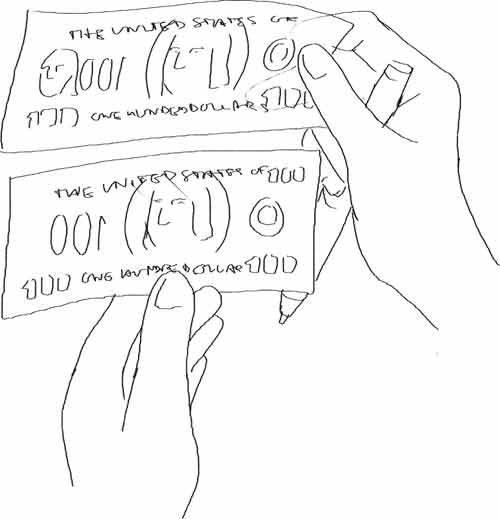
Now this trying of spirits is not some great mysterious thing, but a simple manifestation of different things. Basically, it is the manifestation of the one and only Holy Ghost against every other kind of spirit. Of this, Brother John says, “Many false prophets [spirits] are gone out into the world.” (1 John 4:1) And many of these spirits are very seductive; they appear wholesome and beneficial. They induce the soul to believe that the false spirit is really the Holy Ghost, exactly as the distributor of counterfeit money substitutes the false money for the authentic. And in the world of professing Christianity, there is hardly anything but counterfeit money, so to speak, and relatively few people have much experience with the kind of Holy Ghost living that Brother John and others of that blessed fellowship enjoyed. What is virtuous among the world of professing Christianity is so intermingled with bogus ideas and values, that the good is tainted with the bad. There is a great need to “take forth the precious from the vile.” (Jeremiah 15:19) The command to try the spirits is only possible for people that have the true Spirit, else it is only people comparing the false with the false, i.e., counterfeit with counterfeit.
But even if one has a real and genuine upper-room experience, the nature of trying the spirits necessitates the utmost humility and holy soberness of soul. “And when he had looked round about on them with anger, being grieved for the hardness of their hearts….” (Mark 3:5) The contention was supposedly about the sacredness of the Sabbath day, and the Lord had already dealt with the matter scripturally, as recorded in the previous chapter. This dealing was not received by these people; they were full of accusation, and after Jesus ignored their ruling and healed a man on the Sabbath day, “the Pharisees went forth, and straightway took counsel with the Herodians against him, how they might destroy him.” (Mark 3:6)
The keeping of the Sabbath was an idol to them, and their spirit was tried by the manifestation of the Son of God in teaching and healing. This trying revealed some spiritual reality to any who had ears to hear or spiritual eyes to see. When two things do not fit together—do not harmonize, do not blend—there is always a reason. It may appear that it should be in unity, but if it is not, there is a reason. As to perceiving what that reason is and why it exists, a great deal depends on what kind of spiritual condition you are in, especially whether you are totally subdued to God, endued by Him, and walking in the light He shines on your path. This is what Brother Paul, another Holy Ghost man, told the saints at Ephesus: “Till we all come in the unity of the faith, and of the knowledge of the Son of God, unto a perfect man, unto the measure of the stature of the fulness of Christ: That we henceforth be no more children, tossed to and fro, and carried about with every wind of doctrine, by the sleight of men, and cunning craftiness, whereby they lie in wait to deceive.” (Ephesians 4:13-14) Only the Holy Ghost can keep us from the sleight of men and their cunning craftiness; only the Holy Ghost can shelter us from the compelling force of some of the winds of doctrine that beat vehemently upon Christians. Jesus told us that things are out there which can deceive even the very elect (Matthew 24:24).
Now all fellowships which are based on something other than the thorough dealings of the Holy Ghost will manifest sin, sooner or later. The work of the Holy Ghost will be characterized by purity of heart, and those who possess this purity will act as Jesus did and does. “Brethren, if a man be overtaken in a fault, ye which are spiritual, restore such an one in the spirit of meekness; considering thyself, lest thou also be tempted. Bear ye one another’s burdens, and so fulfil the law of Christ. For if a man think himself to be something, when he is nothing, he deceiveth himself.” (Galatians 6:1-3) The man or woman who has been washed in the blood of our Lord and sanctified with that Holy Spirit of promise is most concerned with doing what is right in God’s eyes. “Considering thyself, lest thou also be tempted.” This inward standard will not believe that “the end justifies the means.” Purity in the inward parts is completely concerned with staying pure in the inward parts before the all-seeing eyes of God. I have seen this in operation, and I count it one of the great privileges and blessings of my life to have seen it. I must also sadly add that I have seen dealings with others where this was not true, and I have experienced being on the receiving end of both kinds of dealings. I have been dealt with by Holy-Ghost-filled men and women and I have been dealt with by some-other-kind-of-ghost-filled people. Those who are filled with the Holy Ghost are full of a burden and desire for you to be clear before God, whereas the other kind are full of a burden and desire for you to submit to them. In the latter case, whether your conscience is clear and whether you are convicted of right or of wrong in what is required of you, does not matter very much. This is because they are not truly spiritual, no matter what their profession, and this lack of true spirituality before God will come out in specific acts and statements that will, in time, bring judgment from God upon them. For God keeps a watchful eye over His little ones, and He says, “But whoso shall offend one of these little ones which believe in me, it were better for him that a millstone were hanged about his neck, and that he were drowned in the depth of the sea.” (Matthew 18:6) Again, “That no man go beyond and defraud his brother in any matter: because that the Lord is the avenger of all such, as we also have forewarned you and testified.” (1 Thessalonians 4:6) Go beyond what? Beyond holiness (1 Thessalonians 4:7). As a brother said, “If you have to step outside of holiness to defend holiness, you have already lost it.”
As I write these words, I think of all the wounded and crippled children of God who have been presented with stumblingblocks by the zeal of those who are not led by the Holy Ghost. God has allowed the trying. God can turn even that which seems to harm us into everlasting joy. God can sanctify to us our deepest distress. “Beloved, think it not strange concerning the fiery trial which is to try you, as though some strange thing happened unto you: But rejoice, inasmuch as ye are partakers of Christ’s sufferings; that, when his glory shall be revealed, ye may be glad also with exceeding joy. If ye be reproached for the name of Christ, happy are ye; for the spirit of glory and of God resteth upon you: on their part he is evil spoken of, but on your part he is glorified. But let none of you suffer as a murderer, or as a thief, or as an evildoer, or as a busybody in other men’s matters. Yet if any man suffer as a Christian, let him not be ashamed; but let him glorify God on this behalf.” (1 Peter 4:12-16) This scripture reveals some of the depths of grace and holy refining that God has for His little children. What a blessing it is not to be ashamed! If you have done right and are reproached for it, the spirit of glory and of God rests upon you. Praise God! This will bring the leap; this will set the joy bells ringing in the soul. “Blessed are ye, when men shall hate you, and when they shall separate you from their company, and shall reproach you, and cast out your name as evil, for the Son of man’s sake. Rejoice ye in that day, and leap for joy: for, behold, your reward is great in heaven: for in the like manner did their fathers unto the prophets.” (Luke 6:22-23) Yea, “By honour and dishonour, by evil report and good report: as deceivers, and yet true.” (2 Corinthians 6:8) It is blessed to be lied about, to be branded as evil and harmful, yet to know that the report is false and a misrepresentation, and that “I would ye should understand, brethren, that the things which happened unto me have fallen out rather unto the furtherance of the gospel.” (Philippians 1:12) Yea, O Lord, at Thy command, we will return to be stoned again.
But there is another side to this trying of the spirits. Whereas it brings the spirit of glory and holy refining upon the children of God, it also brings woe and loss to those who are in the wrong. “For I say unto you, That unto every one which hath shall be given; and from him that hath not, even that he hath shall be taken away from him.” (Luke 19:26) We find this principle working in the trying of the Pharisees when truth was manifested to them by the Lord Jesus. “And Jesus said, For judgment I am come into this world, that they which see not might see; and that they which see might be made blind. And some of the Pharisees which were with him heard these words, and said unto him, Are we blind also? Jesus said unto them, If ye were blind, ye should have no sin: but now ye say, We see; therefore your sin remaineth.” (John 9:39-41) A great deal of light shone upon them in the trial of their spirit, and this manifestation of light was from God. At the final judgment, it will be clearly brought out that they rejected the Lord of Glory, not through ignorance, but from envy. They saw something, realized something in their hearts—namely that they were wrong down deep inside, but were unwilling to admit their need and humble their hearts. There was a spirit in them that was not right, and this spirit manifested itself over and over as Jesus tried them by simply manifesting the reality of truth in the inward parts to them.
A minister was forbidden to distribute literature among a group of people. So he asked: “Was there anything wrong with the literature?” Not only was there nothing in error in the literature, but the people forbidding the distribution were not even familiar with what was being distributed. At one point, the confronted minister was told that he would not want other literature distributed among his people, so it was only fair that he not distribute among them. But this was not true, and the brother replied that they were welcome to come and distribute their literature among the people where he worshiped. This trying of the spirits brought out a profound difference. The people who thus rejected the truth were dedicated to the control and manipulation of the people who listened to them, whereas the minister who distributed truth among them was dedicated to spiritual liberty, openness, and the God-endowed right of men to have access to all the facts and to decide for themselves what is right and what is wrong. The rejecting group was leaning toward a fear of God “taught by the precept of men,” (Isaiah 29:13) whereas the opposed brother was of the scripture, “Provide things honest in the sight of all men.” (Romans 12:17) As a consequence of this trying of the spirits, he was roundly condemned as a sheep-stealer, a deceiver, and unworthy of the confidence of spiritual men and women. Strenuous efforts were made to brand his literature and his influence as subversive, yet the literature was wholesome and so was his influence. There were no examples of sheep stealing to support the accusations with which he was branded; no one had lost out with God or descended into spiritual trouble as a result of his ministry. So strong was the prejudice against him that it led to misrepresentation and a fabricated story, which was published and believed by many who knew nothing of the details.
The trying of the spirits brings out things that are obscure or hidden. When Jesus was speaking in the synagogue at Nazareth, the spirits that were in the hearts of the listeners first manifested themselves in wonder that He spoke so well (Luke 4:22). Then He crossed them by telling them the truth. He told them that there were many widows in Israel in the days of Elijah, yet the prophet was sent to a Gentile widow. He told them that there were many lepers in Israel during the time of Elisha, yet none of them were cleansed except for a Gentile, Naaman the Syrian. And this trying of the spirits produced an immediate and violent reaction. “And all they in the synagogue, when they heard these things, were filled with wrath, and rose up, and thrust him out of the city, and led him unto the brow of the hill whereon their city was built, that they might cast him down headlong.” (Luke 4:28-29) Is this not amazing? At one moment, the people are rather flattered that a local boy could speak so well; in the next moment, they are filled with the spirit of murder and begin to attempt to the destruction of a man who only told them the truth—truth that they had long chosen not to hear or consider—truth that revealed the awful condition of their hearts to themselves, if they would receive it. The same spirit manifested itself in the trying of the spirits in which Brother Paul was involved, as related in Acts 22:21-23.
There was a minister, used of God, who was one of the Lord’s rough vessels of clay. He was about as far from speaking smooth things, of tickling people’s ears, as it was possible to get. Among the people to whom he preached, there was a rising disposition to choose their own ministers. And so the Lord used this brother to try the spirits. How did He use him? He gave him a message each first Sunday of an annual meeting, and the brother delivered the message that was given to him. There was a steady, then rising, opposition to the brother’s messages. After the brother had once again preached on the first Sunday of the meeting, another man of God was burdened to speak. He said to the people, “We must be willing to accept what God has to say to us, by whomever He chooses to say it, and however He sees fit to send it.” This was true, and it was God’s mercy to the listeners who were rejecting the truth of the message because they did not like how God went about it.
We see that this is God’s way, this trying of the spirits. David tells us of Joseph, “The word of the Lord tried him.” (Psalm 105:19) What there was in Joseph’s heart was proven—tried. He was refined and prepared to be meet for the Master’s use by the trial. We read also of the Israelites, “And Moses said unto the people, Fear not: for God is come to prove you, and that his fear may be before your faces, that ye sin not.” (Exodus 20:20)
From the standpoint of how God regards this trying of the spirits and of how He teaches His children to regard it, the most important thing is for the child of God to keep saved. A child of God must exercise himself (perhaps quite vigorously) to keep a conscience void of offense toward God and man. And not only outwardly, but inwardly. He must battle to forgive completely from the heart; he must consecrate to bear injustice, to suffer loss of reputation, to bear the label of a troublemaker—an insignificant little “nobody.” He may appear to “lose” the confrontation; his statements may appear as Brother Paul recorded was said of him, “his bodily presence is weak, and his speech contemptible,” (2 Corinthians 10:10) but the outward appearance of winning or losing is not the point. If the cause of truth appears to be weakened outwardly, it is well to remember that God is still in control and that He allows sheep to be assaulted by lions and bears to manifest the nature of meekly holding the true position, standing firm. As the out-talked mother said to her college-educated son, “Well, Johnny, you’ve become educated and can talk better than your old mother, but,” placing her hand on her heart, she continued, “in here, I know it is not so!” Here is a text that speaks with great authority: “The servant of the Lord must not strive; but be gentle unto all men, apt to teach, patient, in meekness instructing those that oppose themselves; if God peradventure will give them repentance to the acknowledging of the truth; and that they may recover themselves out of the snare of the devil, who are taken captive by him at his will.” (2 Timothy 2:24) In Abraham’s confrontation with Lot, he does not look impressive to the flesh at all. Indeed, it seems that the conclusion to the problem of the wells for cattle is resolved to Lot’s advantage, but it was a trying of the spirits, and it was significant and was recorded for our benefit. Note the outcome of that trial: “Abram dwelled in the land of Canaan, and Lot dwelled in the cities of the plain, and pitched his tent toward Sodom. But the men of Sodom were wicked and sinners before the LORD exceedingly.” (Genesis 13:12-13) Note the attitude of God toward the result, as the record continues. Lot “won” to his own undoing. The true picture emerges in its entirety when the angels take him by the hand to lead him out of Sodom before its destruction. Many a child of God has been put aside, reviled, their name cast out as evil, when God knew they were keeping saved, whereas their opposers were undermined and subverted. And thus is brought to pass the warning to the rich: “Ye have condemned and killed the just; and he doth not resist you.” (James 4:6)
Consider this allegory:
Finally, one day, Miss Vanity noticed that her intendant [Mr. Hypocrisy] was looking quite pale, and upon inquiry, found that he had been eavesdropping and had heard a conversation between those unruly ones, Miss Perception, Mr. Steadfast, and his wife, Humility. There was also with them a cousin of Mr. Sincerity by the name of Mr. Holy Boldness; and the conversation went thus:
Miss Perception: “I simply can’t see black white, or white as black; it matters not what they say.”
Mr. Steadfast: “No, none of these things move me at all, and I for one will stand against it if it takes me to the chopping block.”
Humility: “I am praying the Lord to shake the scales from the eyes of the little ones, if He has to use an earthquake to do it.”
Mr. Boldness: “Yes; I will pray also, but perhaps there is something we can do to answer our own prayers. Let’s quit ourselves like men, and expose and fight the thing.”
At this Mr. Hypocrisy nearly sank into a swoon for hitherto he had been overlooking those “insignificant ignoramuses,” as he had always called them.
Upon this news the committee was hastily called together to consult as to what should be done with these troublers. The decision was to tar and feather them as liars and accusers of the brethren; and thus make them an example to the flock.
[Lottie L. Jarvis; A True Story in Allegory, “Trouble with the Faithful Ones”]
Notice how this appears to end. God’s little children do the right thing, regardless of the cost, and God allows His little children to be tarred and feathered as liars and accusers of the brethren. As was said of our Lord, “Yet it pleased the LORD to bruise him; he hath put him to grief.” (Isaiah 53:10) “He was oppressed, and he was afflicted, yet he opened not his mouth: he is brought as a lamb to the slaughter, and as a sheep before her shearers is dumb, so he openeth not his mouth.” (Isaiah 53:7)

God doesn’t think as we think (Isaiah 55:8-9). Men imagine that God is a certain way; they construct their boxes of belief, deceiving themselves in thinking that their creeds describe God and His ways accurately. They believe that God will honor their efforts, even as the Pharisees imagined that when the Messiah came, they would be approved and commended. They thought that they would fit with Him. But God, in mercy to them and to us, tries our spirit and shows “the house to the house” (Ezekiel 43:10-11) to prove what is in our hearts. What will we do with the trying? Will we be ashamed of any revealed iniquity? Will we be willing to measure the God-given pattern? Will we be willing to say, “I see that I am off. God didn’t teach me that part. Something else has been working on me. I have made an idol. I have made an Ishmael, and now I see that I must send him away. I have constructed a creed and made a way of going about things that I thought God had taught me, but now I see that He is bigger than my box, and I must abandon it if I am to have His full blessing.”
“Beloved, think it not strange concerning the fiery trial which is to try you, as though some strange thing happened unto you.” (1 Peter 4:12)
We are experiencing that it takes a man wonderfully burned out for God to publish a paper that is simply true to Jesus and up to the Bible standard of salvation from all sin. A thousand points of expediency and policy must be disregarded, and the eye fixed on God alone. O reader, you that love God and the truth, do not forget to pray for us.
[Daniel S. Warner—quoted in Andrew L. Byers; Birth of a Reformation, “The Gospel Trumpet”]
The work of God continues as He has ordained. “Many shall be purified, and made white, and tried; but the wicked shall do wickedly; and none of the wicked shall understand; but the wise shall understand.” (Daniel 12:10)
 God’s Way Is Best
The Shield of Faith
The Idols Under the Modest Skirts
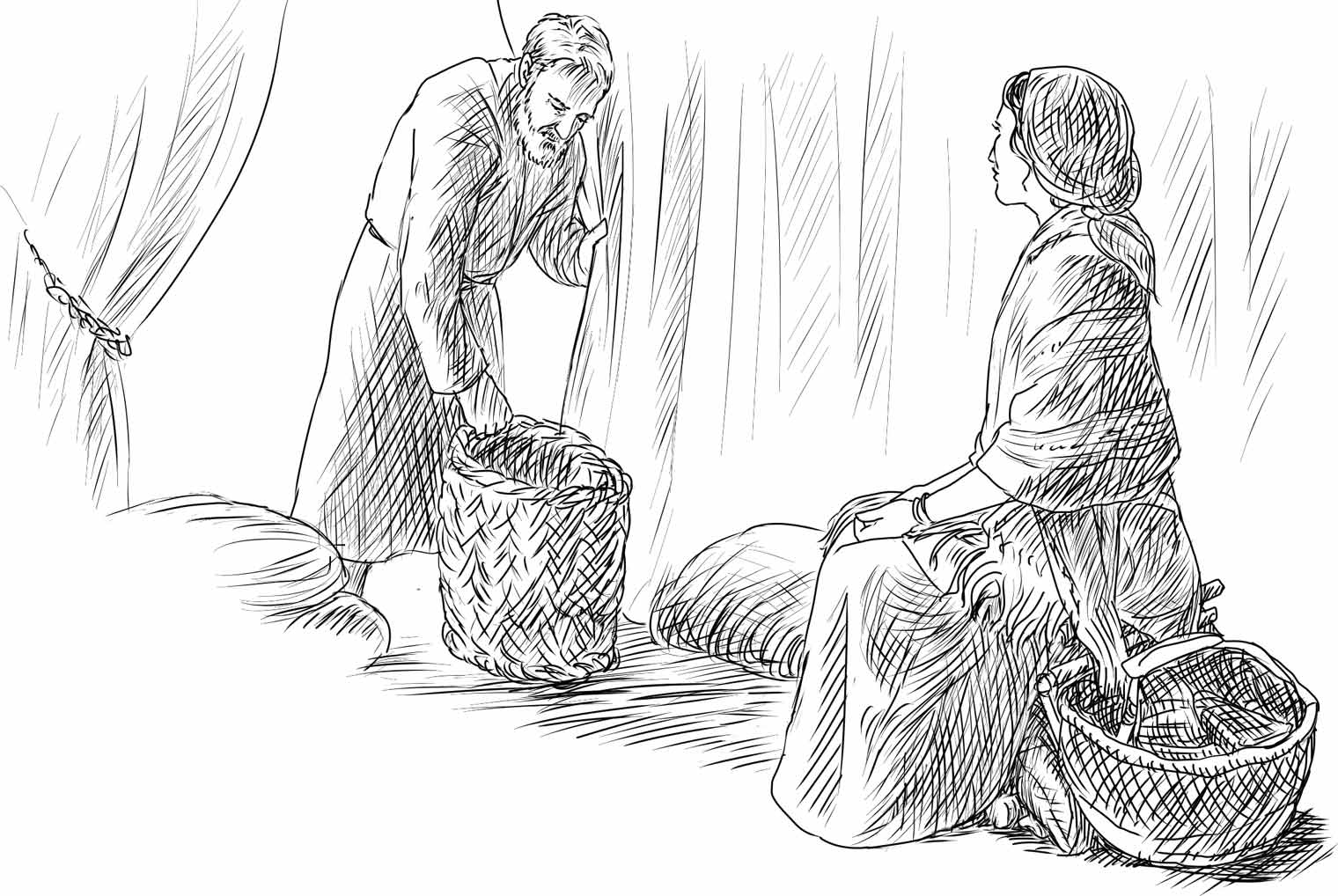
“And she [Rachel, second wife of Jacob] said to her father, Let it not displease my lord that I cannot rise up before thee; for the custom of women is upon me. And he searched, but found not the images.” (Genesis 31:35)
“The custom… is upon me.” “Thus have ye made the commandment of God of none effect by your tradition.” (Mattheww 15:6)
Human nature is so cunning and deceitful, so desperately wicked, that it seizes upon religious tradition and custom to justify itself in the things that it desires in the inward parts. For there is room in the careful, sanctimonious observance of the outward trappings of godliness to offer impressive reverence and idolatrous veneration that strangely comforts the uneasy conscience.
King Saul calmed down under the influence of the hymns of David, but he retained the same wicked heart at the end of the performance as when it began. The custom of moderated wickedness became a feature of his life. As the harp played the sweet songs of Zion, and a sweet, innocent voice sang the sacred words, the carnality of the hypocritical king was soothed and reassured. He felt reassured that he was not so bad, after all. Under the sentimental influence of the songs of Zion, Saul felt that he meant well—that the means were justified by the greater good. The uncomfortable, smarting memory of the wicked acts, chafing under the lash of outraged conscience, was dimmed. Many an unacceptable-before-God heart finds comfort in the customs, the forms, of worship in a chapel, and goes forth seemingly in a better mood—but basically unchanged, still a captive of the devil, still in the kingdom of darkness, still judgment-bound with hell to follow. The custom is upon me; I rest upon the cherished images. “Thus have ye made the commandment of God of none effect by your tradition.”
She sat upon the idols. She rested herself upon the abominations beneath her modest skirts. She lied to her father as she sat upon the pagan images. (Notice how respectfully she lied.) Only she (and God) knew that they were there. Her father was searching for them. Her husband knew nothing of the matter.
The preachers of the outward standards hammer away at the appearance, “for man looketh on the outward appearance.” (1 Samuel 16:7) Get the outer appearance right! They demonstrate what will happen if the outer appearance is not right. They harangue away at the effect of the outer appearance.
But God is looking at the heart. He is looking beneath the good appearance of the modest skirts. He is looking in the heart at the idols, at the pride, at the stubbornness, at the prejudice, at the self-will, at the unwillingness to go as deep as the Spirit of God would go. He sees the idol of the heart. “Your glorying is not good. Know ye not that a little leaven leaveneth the whole lump?” (1 Corinthians 5:6) He sees the carnal leaven of the reasoning, the fleshly assurance that is not born of His Spirit, the knowledge of the form of truth that is not known and possessed as it should be. He sees the unacceptable heart.
The disciplined, careful, zealous man goes to the temple to pray with himself. He thanks his god, addressing him as the Almighty, for a number of actually quite necessary virtues. He has done it before. At times, his words are punctuated with the “amens” of those of like spirit and mind. A little arrogance peeks out. “God, I thank thee, that I am not as other men are… even as this publican.” (Luke 18:11) Can you see the idols beneath the skirts of virtue? Can you see the exalted doctrine in the proud Pharisee’s heart? There are many people of whom it is well not to be as they are—but if I have such at attitude as this, I might as well be just as lacking in virtue as the worst sinner. What? The worst sinner, you say? Listen. The pride is every bit as bad as extortion, injustice, adultery, and the worst excesses of the worst publican. The pride is the idol under the good-appearing, concealing “skirts” of the man. He rests upon it; he draws his assurance from it.
After Rachel took those idols, unbeknown to any other person, the idols were sought by her father. Laban had accused Jacob of taking his gods, and Jacob had protested his innocence. “There are no false gods among us,” he said. “Anybody that has taken those things will die” (Genesis 31:32). There was more truth to that statement than Jacob realized himself. He had no idea that his favorite wife, the one for whom he had labored fourteen years, had taken the idols. There are many Jacob preachers today who are basically in denial of serious and persistent spiritual disasters among them from those who have entered into possession of idols—even idols under their modest skirts. “For this cause many are weak and sickly among you, and many sleep.” (1 Corinthians 11:30) Not only are these conditions prevailing, with few able to pray the prayer of faith and few able to testify to real victory by heaven’s grace in the daily trials and temptations of life, but many are just flat-out, graveyard dead. For Rachel, favorite wife or no, did die before much time had passed, in the birth of her second son. But before this happened, before this judgment came upon her, there was an overtaking and a diligent search for the idols that found nothing. Not because there was nothing to find, but because the abomination was hidden well beneath the innocent appearance of things. The search was not quite thorough enough; the determination to find it; the belief that it was there, was lacking.
“Wherefore, my dearly beloved, flee from idolatry.” (1 Corinthians 10:14)
Were there no indicators that the heart of Rachel, wife of Jacob, was turned after false gods? Did her inward desire fail to manifest itself, long before she stole her father’s gods and concealed them?
But Jacob was focused on his troubles with Uncle Laban. Jacob was focused on his objectives and efforts. He was distracted. The fear of God was not upon the man as it needed to be. Had it been so, he would have taken some kind of action, as Moses did when returning to Egypt with his family after the visitation from God at the burning bush.
“And it came to pass by the way in the inn, that the LORD met him [Moses], and sought to kill him [Moses’ oldest son]. Then Zipporah [the wife of Moses] took a sharp stone, and cut off the foreskin of her son, and cast it at his feet, and said, Surely a bloody husband art thou to me. So he [God] let him [the oldest son] go: then she [the wife of Moses] said, A bloody husband thou art, because of the circumcision.” (Exodus 4:24-26)
Moses was sent on a mission to tell Pharaoh that God would slay Pharaoh’s son, even his firstborn, if Pharaoh would not do as God wanted him to do—let Israel go. But Moses went on this mission with his son uncircumcised, so God, being no respecter of persons, sought to kill the oldest son of Moses. Then Moses had his son circumcised by the boy’s mother, right then and there, even as the boy was dying—for he knew that the only way to satisfy God was to meet conditions right then and there for divine acceptance. This offended the wife, but was acceptable to God.
The only way to escape the wrath of God is to agree with our adversary quickly, so to speak. Meet Bible conditions; get rid of the idols; humble down—way down—and obey from the heart that form of doctrine delivered to you. Do this just as soon as the revelation of the images under the modest skirts begins. “For the wrath of God is revealed from heaven against all ungodliness and unrighteousness of men, who hold the truth in unrighteousness.” (Romans 1:18) You will notice that God is faithful to deal continually with the reality of things. People who fill themselves with the husks of the forms of righteousness—men who hold the truth in unrighteousness—will find that it does not work for them as it worked for those who held the truth in righteousness of heart. When they attempt to go through the motions of trusting God completely for healing, He will not answer the same way that He did when there was no idol under the skirt. God knows when we are fully trusting Him, or when we are going through the motions while doctoring ourselves, or just hoping we’ll get through somehow, or some path other than complete and exclusive faith. If we regard iniquity in our heart, He will not hear us; and our cemeteries will fill up prematurely, and we will not get out of our trials what God meant for us to grasp.
If we insist on some outward sign of submission on the head of wives to husbands, then we will find that the true victory inside, even truth in the inward parts, will fade and become less of a blessing and more of a habit or a burden, while we focus on and concentrate on having the appearance of victory rather than actually triumphing inside over all the things that would rob us of submission. This never makes sense to those who fight so valiantly to retain the outward standard, for they really feel that to lose the appearance is to lose the fight. But the real fight is inward. Real victory inside will express itself outside—if real victory exists within, it will not fail to reveal itself in time. But it will not necessarily express itself in what people think the outward standard should be. A wife who has won the consent of her heart to submit to her husband as Sarah did to Abraham will not be rejoicing in the covering of her head, whether it be her hair or another covering. Such a wife who has triumphed within will know that the real elements of victory did not come from off her head, but from higher up, even in heaven. When the blessing of consecrating to the sacred place of a wife with a husband for a head comes upon her from heaven; it comes into her inner being, even in her heart, and from there she is now enabled to serve God acceptably and with joy in her high and noble calling. There is far more than the custom of women, so to speak, upon her. There is a lack of idolatry, and a great pliability to be shaped for the Master’s use upon His turning wheel, with no resistance on her part. Hallelujah! Here is victory indeed. Such a wife has power to keep trusting God when Abraham acts as Sarah’s Abraham did. She can maintain her position and station in life by trusting Him who fails not, although surrounded by perils brought on by her husband’s faults and failings. And did Sister Sarah trust God in vain? No. Praise God!
Now a woman who has concealed a certain idolatrous regard in her heart for the doctrines of men may trust in her wearing a piece of apparel on her head or trust in never cutting her hair. She may expect that by doing things she will be kept. She may trust in those outward actions for serenity and peace in such storms, for the maintenance of an absolute consecration and committing of herself to God; but the idols upon which she sits will not impart those needful and vital things. She may have carefully kept the rules; she may possess the highest esteem of the congregation, even the esteem of her husband, but the hour-to-hour keeping power she needs is not supplied by anything but real grace and strength from God. She that has relied on external standards will gain some strength from human sympathy and support, from a clear mental conviction that she is doing the right thing, (for as Brother Paul said, there is a “shew of wisdom” (Colossians 2:23) in these things), but oh, that comfort and inward assurance that comes from Him who is the very God of Comfort! There is nothing like it.
But cannot a person who wears such a covering get the same inward victory? Yes. But not a person who trusts in an outward standard. You see, it is the inward that counts. If the modest clothes are torn from the body, it is the modesty of the inward man (or woman) that counts. It is that which is still giving answer according to right and holiness that matters when push comes to shove, and the full weight of persecution is allowed to fall upon the trusting child of God. There was no modest clothing on the cross, but the Savior’s heart was still as pure, as holy, as ever. “Father, forgive them; for they know not what they do.” (Luke 23:34)
Beware of the accepted norms among a people, especially if they are not definitely taught in the Word of God. These are the customs of a given people, the traditions. They are the identifying habits of a given people. Now of the people of God, we read: “Which in time past were not a people, but are now the people of God: which had not obtained mercy, but now have obtained mercy.” (1 Peter 2:10) They once had no common identifying traditions or customs. They were not a certain race, nor a certain nationality. The people of God are drawn from all nations, all races. They come with the accompanying traditions and customs of their races, their social stations, their nationalities, their genders—but these are not the common, identical things that distinguish them as the people of God. What are the common things now? “Which had not obtained mercy, but now have obtained mercy.” (1 Peter 2:10) What else? Every single one of the newly-minted people of God have been “called… out of darkness into His marvellous light.” (1 Peter 2:9) Jude calls it the “common salvation,” and speaks of “the faith which was once delivered unto the saints.” (Jude 3) “Till we all come in the unity of the faith, and of the knowledge of the Son of God, unto a perfect man, unto the measure of the stature of the fulness of Christ.” (Ephesians 4:13) Many people think of “the faith” as a body of knowledge, a creed, an understanding of doctrine, but this scripture in Jude hints at something more than can be passed on from generation to generation as a creed. Brother Jude says it “was once delivered unto the saints.” From where? From heaven, from God. How is it done? “Jesus answered and said unto him, Verily, verily, I say unto thee, Except a man be born again, he cannot see the kingdom of God.” (John 3:3) No man can make another man born again—“born from above” (margin). “That which is born of the flesh is flesh; and that which is born of the Spirit is spirit.” (John 3:6) We have people that are said “to be raised in the truth,” but this is false. They may be raised around truth, but the only way to be raised in the truth is in being born from above by the Spirit of God. Folks say that they are holding the standard for their children, but that is only outwardly, for it is not possible inwardly. It is not in men’s hands to hold it or bestow it inwardly—all we can do with God’s inward standard is receive it and live it unto the Lord. Then it bears fruit and shines out to all the unsaved, including our unsaved children. Merely displaying the form of godliness will make an idol, but bearing the fruit of godliness because of a possessed godly inward life will focus the attention on the work of God in the heart. People raised around truth have not come to the truth. People who are mentally convinced and loyal still have not come to the truth.
“Do ye look on things after the outward appearance?” (2 Corinthians 10:7) “That ye may have somewhat to answer them which glory in appearance, and not in heart.” (2 Corinthians 10:12)
Holy living is not only the refraining from doing the wrong and the doing of the right, but it is the refraining from doing the wrong from an inward principle of holy hatred of the wrong inwrought in the heart by the Holy Spirit, and a doing of the right in the life and holiness of God. It is more than the good deeds done by human life; it is good deeds done by the life of God in the human life. There is a vast difference. There is danger, great danger, in holiness professors attending to the outward life to the neglect of the inward life. So long as they do not do anything wrong, and so long as they do things that are right, they think themselves safe. We can live good lives and, like the church at Ephesus, lose the love of God out of the soul. Right living may be only man in action; holy living is God in action.
[Charles E. Orr; Helps to Holy Living, “Meditating on God and His Word”]
To hold loyalty to Bible doctrines and principle in the flesh, by the will of man alone, is to hew out a graven image—an idol for the soul. Since man goes by the outward appearance, and salvation is absolutely a matter of inward appearance with outward fruit which varies according to the light and understanding of the individual, a focus on outward appearance will inevitably result in the creation of an idol of doctrine and produce unity only among such human beings (saved and unsaved) as will bow at the altar of the doctrine. This is the true nature, the reality, of what mostly passes itself off for Christian churches. They worship at the altar of their creeds (their beliefs), rather than the inwardly-imparted faith (life) from God by divine work in the heart. And the awful thing is that these traditions make the Word of God of none effect. Why? You don’t need something from God to meet the requirements of these idol-worshiping assemblies. You can measure up and be accepted without a work of grace in your heart. The Word of God, focused on the inward need of the heart, becomes actually irrelevant when human tradition is idolized.
Think of it. I can dress modestly without a work of modesty wrought in my heart. You can take off the necktie, thinking thus to be delivered from superfluity and ornamentation, regardless of whether you are delivered from pride. The outward standard is not necessarily connected to the inner. I can bow to outward conformity to a body of ministry, whether I am convicted or convinced of the truth itself. This is will worship.
This is where human nature miscalculates. This is where the deceitful heart deceives. The reasoning goes like this: “It is so humbling, even humiliating, to look different than the world—to be a gazingstock, to appear so peculiar—that one must have something inside to produce such a change on the outside.” Now this line of reasoning, with respect to purity of motives, real love of God, an inward principle of holiness established by the Holy Ghost, is easily discredited. Look at someone expressing Gothic-Punk culture. Why is their hair pink, orange, fluorescent green? Why do they have such outlandish body tattoos, such weird jewelry piercings, such spiked hair, black lipstick? Their motive is mostly to shock. (It works, doesn’t it?) But some of them are responding to a peer pressure; they want to fit in with others that have caught their fancy. Holiness? Real love of God? Purity of motive? Of course not. Merely looking distinctive and peculiar is not a virtue in itself.
When the zealot looks upon a congregation of saint-look-alikes, he or she is not looking at the motives of the heart. They are looking at a deeply satisfying appearance. They look so good—to the outward appearance. “We need more of them.” “All of the people should look like this.” “They are like a city set on a hill that cannot be hid.” When the choir of young voices is raised in beautiful harmony to a stunning climax of sound, when people are so affected as to weep, the oracle of outward appearance is overjoyed and ecstatic. “Wasn’t that wonderful? How could anyone not see something in that?”
“And he said unto them, Ye are they which justify yourselves before men; but God knoweth your hearts: for that which is highly esteemed among men is abomination in the sight of God.” (Luke 16:15) God sees it for what it is—in the secret corridors of the heart. Then He sends His Word to the goodly-looking throng, “For the word of God is quick, and powerful, and sharper than any twoedged sword, piercing even to the dividing asunder of soul and spirit, and of the joints and marrow, and is a discerner of the thoughts and intents of the heart. Neither is there any creature that is not manifest in his sight: but all things are naked and opened unto the eyes of him with whom we have to do.” (Hebrews 4:12-13) This is remarkably horrifying to the outwardly-focused human being. They are saying: “Except ye be circumcised after the manner of Moses, ye cannot be saved.” (Acts 15:1) But there is consternation when the Word of God is preached in penetrating power. Then it is, “These that have turned the world upside down are come hither also.” (Acts 17:6) “And thus are the secrets of his heart made manifest; and so falling down on his face he will worship God, and report that God is in you of a truth.” (1 Corinthians 14:25)
The only answer to the idols hidden beneath the modest skirts is the presentation of the Word in prophesying and praying that makes manifest the secrets of the heart, to the extent one falls upon their face toward God. This is the only discovery of these hidden things that brings real deliverance.
Consider how much the idols meant to Rachel. She undertook great risks to acquire them and to conceal them. She suffered the effects of deceiving her husband, even her sister, their handmaidens, her father. What did she see in those dead, inanimate idols that moved her to pay such a price? What responded in her to idolatry? Where was Satan’s seat in her? In one sense, the trouble was not the idols upon which she sat; the problem was the idols in her heart. Did she pray to them? Did she rely upon them?
Man looks upon something from an outer appearance because he thinks he sees some advantage in it. A certain form of dress will increase the unity, he thinks. Some other cherished concept seems to offer advantages that are worth the price. Eve would disobey the plain commandment of God because “she saw that the tree was good for food, and that it was pleasant to the eyes, and a tree to be desired to make one wise.” (Genesis 3:6) Did the eating of the forbidden fruit accomplish the coveted objectives? Yes, but with a twist—a terrible side effect. The wisdom was the knowledge of both good and evil—not just the good. It did not turn out for either of the guilty pair as they had hoped. If they could have seen all the future, would they have abstained?
Now this is very likely the case with Rachel, too. However she regarded these idols before, they took on an ominous aspect after she stole and hid them. What now? What will husband think… and do… if he sees these things? How can I keep hiding them? And the more that Jacob got down to business in serving the one, true God, the more the wife’s torment in concealing her stolen idols. And what about the children—energetic, inquisitive, like sponges, absorbing ideas and experiences as they develop—what will they think? Will they become idolaters like myself? These are serious, weighty thoughts.
And finally, discovery. “For there is nothing covered, that shall not be revealed; neither hid, that shall not be known.” (Luke 12:2) The Lord took Rachel’s life. She went to face a just and holy God. What happened to the idols? (Were they all abandoned at the time of Genesis 35:2-4? If so, did it take the massacre of all of Shechem’s people and the resultant danger of annihilation to finally bring about the forsaking of Rachel’s idols?) How did the family regard Jacob’s favorite wife, the mother of two of his children (whom he favored) after the possession of idols was revealed? But even this amount of discovery was not the end of it. The folly of Rachel in clinging to idols continued and continues to be manifest, even to our time. God spoke of it to Moses, and it was recorded in the book of Genesis for generation upon generation of God’s children and others to read and ponder. “But they [men of corrupt minds, resistors of the truth, reprobate concerning the faith] shall proceed no further: for their folly shall be manifest unto all men, as theirs [Jannes and Jambres] also was.” (2 Timothy 3:9) Yea, “He that covereth his sins shall not prosper: but whoso confesseth and forsaketh them shall have mercy.” (Proverbs 28:13)
“But God is faithful.” (1 Corinthians 10:13) There was a marvelous light, a powerful light, a searching light, shining on the dysfunctional family of Jacob—a group of human beings put together by being cheated, by the dispersed affections of the head of the family with no less than four mothers of his children, by favoritism and the resultant envies, passions, rivalries. What a mess! If Grandpa Abraham had learned a serious lesson with Sarah and Hagar, how much further did sin take Jacob in his life? If favoritism and deception tore apart the family of Isaac and Rebecca, what can be said of Jacob’s family? We catch a hint of this when Jacob told Pharoah, “Few and evil have the days of the years of my life been, and have not attained unto the days of the years of the life of my fathers in the days of their pilgrimage.” (Genesis 47:9) What a terrible testimony! “Few and evil have the days of the years of my life been.” I have not done as well as those before me. All of this was known to some extent by Rachel in her sin. And the dealings of God with Jacob and his whole family kept casting light on what she had done and was doing. The Lord kept pulling on her reins, so to speak. “Thine own wickedness shall correct thee, and thy backslidings shall reprove thee: know therefore and see that it is an evil thing and bitter, that thou hast forsaken the LORD thy God, and that my fear is not in thee, saith the Lord GOD of hosts.” (Jeremiah 2:19) Her rival, her sister, had first claim on her husband’s affections; for Leah gave him sons, and then Rachel had to share Jacob with her sister. As you can see, sin is expensive; it will cost more than you ever imagined. And then Rachel was cut off in her years. She had only one child to mother for a short time, and she died in giving birth to the second. In the meantime, a host (“a troop”) of children by other women were added to the family of Jacob. All of this chafing, this frustration, was from God—He was dealing with Rachel’s heart, as well as others’.
Many people are frustrated in their ambitions. They have certain idols in their heart, and they devote themselves to worshiping at the altars of “success,” imagining that peace and satisfaction are to be found thereat. But God, in mercy, does not allow things to work out for many. There is more mercy in this than they can appreciate, yet they turn not from their idolatrous way. At times, God allows a few of them to gain the wealth, the prestige, the advantages for which they all sacrifice, and the end result—the awful cost—is worthy of the attention of all. But here, too, they get it wrong. They are blind. They go not to the sanctuary, so they do not see the end (Psalm 73:17). They are blind to the slipperiness, the casting down, the solemn accountability, the corroding sin that turns worldly success to ashes in the mouth. The defiled conscience. The people who have been trampled, the atrocities committed, covered and left behind, the impending judgment, the stewardship of it all.
In the end, I assure you, Rachel regretted taking those idols. It was one of the worst mistakes of her life. She heartily wishes now she had never so much as laid eyes on them, that she had never heard of them. They were thieves and stole her life. She thought she was taking them, but they were taking her.
Rachel’s Character
“Leah was tender eyed; but Rachel was beautiful and well favoured.” (Gen 29:17) God measures out the portion of every human being, and the result is an enormous diversity in how we look, our general disposition, and the various abilities and potential that each is given. Here were two sisters, one of whom was raccoth—soft, delicate, lovely, especially in her eyes. The other is described as yephath toar and yephath mareh—beautiful in shape, person, mien, and gait and beautiful in her countenance. Thus we are created. Some appear to have quite the advantage in appearance and personality—they appear to sparkle and to surpass their siblings or others their age. Like Absalom and Tamar, they are given gifts that require carefulness and humility to properly handle, else they will be spoiled and marred in their potential. Every person has their own beauty and their own usefulness. “Favour is deceitful, and beauty is vain: but a woman that feareth the LORD, she shall be praised.” (Proverbs 31:30) To ignore a wealth of natural gifts and to humbly fear God is a very effective counterbalance, but very few seem to find this path. Reader, think upon this question: How did Rachel feel about her perceived advantages? Did she fear God? Was she looking to Him to help her in her life, or was she leaning upon her status in the family as “beautiful and well favored”?
Then we consider the man who had entered Rachel’s family circle. He had been close to his mother. Did this seem to offer any advantage to Rachel? Jacob was obviously smitten with her—not her older, marriage-eligible sister, the tender-eyed Leah. Jacob and Rachel, con man and spoiled girl. Did this well-favored, beautiful young woman ever imagine a situation where she and her sister would be married to the same husband, a husband that was infatuated with her, while she was unable to bear children? Her less-favored sister, who obtained the one who loved her (Rachel) by fraud and deceit, would have one baby after another with her husband. It is God who tests our inner motives, who exposes our own heart condition to ourselves (Jeremiah 17:9-10). So… what came out of Rachel’s heart?
“And when Rachel saw that she bare Jacob no children, Rachel envied her sister; and said unto Jacob, Give me children, or else I die.” (Genesis 30:1) This is an imperious demand—an indicator of the lack of fear of God in this young wife’s life. Her husband was startled to find that the object of his affection would actually make such a demand of him. “And Jacob’s anger was kindled against Rachel: and he said, Am I in God’s stead, who hath withheld from thee the fruit of the womb?” (Genesis 30:2) The contrast between husband and wife could hardly be demonstrated more vividly. The spoiled girl, the prima donna: “Give me what I want. I would rather be dead than ungratified.” And the startled husband, fascinated and infatuated with his beautiful, young wife: “I didn’t make you barren. God did. How can I make up for what God does?”
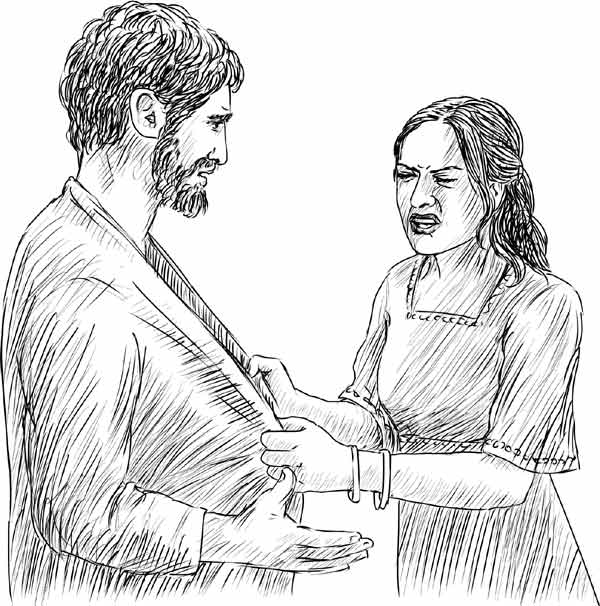
The pampered, coddled woman didn’t accept her husband’s displeasure with her, either. If others failed her in getting her own way, she would take matters into her own hands. When Jacob’s mother was barren, her husband prayed for her and entreated God (Genesis 25:21), but Jacob did not do so with Rachel. Why? It was different in many ways. Jacob, the cheater, had been cheated, thus ending up with two wives—what a sad and miserable frustration it was turning out to be. He recognized that God had allowed Rachel to be barren, but he was in no condition to pray for her.
“Oh, what peace we often forfeit,
Oh, what needless pain we bear,
All because we do not carry
Everything to God in prayer!”*
Who can fully appreciate the cost of sinning? The shrewd con man was cheated by sin, even more than he was cheated by Uncle Laban. And now he was married to Uncle Cheater’s two daughters, and the most attractive one (to him) was accustomed to having her own way all of the time. Rachel could not bear to be in exactly the position that she was in. She, the favored one, the beautiful one, was now the pitied one. Now Rachel felt the awful sting of envy.
Uncle Laban was an idolater, too. Where did Rachel look for help and assistance when the storms of life became too violent and overwhelming for even the most hard-headed and strongest-willed?
In Proverbs 7:10-23, we read of a spoiled woman who went further than Rachel ever did. She is described as “a woman with the attire of an harlot.” “Subtle of heart.” “She is loud and stubborn; her feet abide not in her house.” Notice the restlessness here—the lack of peace—the lack of consecration to be a wife, to be a mother. She has “an impudent face”—a disrespectful, rude, shameless, brazen, audacious attitude. She is very good at fair speeches and flattery of the lips.
As Rachel took the first steps down this path, we see the same characteristics in their embryonic form. At the bottom of it all is this determination to do what I please, regardless of consequences. “I see what I want, and I will have it!” God wouldn’t let her have a child? She would find a way around it, somehow. So we read, “And she said, Behold my maid Bilhah, go in unto her; and she shall bear upon my knees, that I may also have children by her.” (Genesis 30:3)
This was the beginning of an even more deplorable family situation than had been the case when the lesser-favored wife had all the children and the more-favored wife had none. Now the handmaidens of the two rival wives became involved, too. As the two women competed relentlessly for advantage in their husband’s eyes, and he, silly fool, had so little of the fear of God upon him that he participated in the emulations that now characterized his family, did he ever think what kind of family, what kind of life, was being created by all this sinning? As the songwriter put it, “Sin will take you further than you ever thought you would go.” If rivalry between Jacob’s brother, Esau, and himself brought about deplorable results in the family of his father and mother, just look at how sin was working in Jacob’s life, now!
It is out of this background, this horrible state of affairs, that we find the whole family fleeing from father-in-law Laban. The recriminations flew; everybody blamed everyone else, and no one took the blame. And in the middle of it all, the spoiled daughter stole her father’s idols and concealed them, telling no one, not even her husband. Not just a spoiled girl… now a spoiled girl with idols. The outcome could have been disastrous; Jacob and his family could have been wiped out, but God did not allow it to come to this.
The lesson is plain. Sin begets sin. The most minimal sin has the potential for the most horrible consequences. In the sin of Micah, as related in Judges 17, we find that theft lay at the beginning, then the crafting of images, both molten and graven. (Some things come about because people are melted down, while others are carefully, perhaps even skillfully, graven.) This led to a false priest, a hireling, then to violence and oppression and yet more theft.
The idols that are hidden beneath the modest-appearing skirts are hard to really find. They have roots that go beyond their current manifestation. It is no small matter to trace the sin back to its source in the heart. Only God can help us to search so perseveringly, so diligently, so that we can find that which is so well hidden. But there is no real finding or destroying of the idols without this. “I commune with mine own heart: and my spirit made diligent search.” (Psalm 77:6) Without this, repentance is premature and does not prove out.
Observation from years of experience teaches us that relatively few people escape the framework of their conditioning. It is possible to live close enough to God that we find ourselves outside of our “box” (and outside of our “comfort” zone), but very few are doing so. In the minds of most people, a stigma is attached to drawing near to God, getting more spiritual, etc. And to this is added the hazards of trying to escape our background. In trying to escape, we may get (and many have gotten) into worse trouble. Those hazards are real, and many a precious soul has been ensnared in fanaticism and strain. If we attempt to draw near to God without being led by the Spirit of God, step by step, we will undoubtedly come to grief. “There is a path which no fowl knoweth, and which the vulture’s eye hath not seen: The lion’s whelps have not trodden it, nor the fierce lion passed by it.” (Job 28:7-8) The Spirit of God does know it, and He knows how to guide us into all truth, safely and without misstep. If we are guided by the Holy Ghost, it need not be said of us, “And he searched, but he found not the images.” Not only may the images be found, abandoned, and destroyed, but we can be true worshipers, worshiping in Spirit and in truth, for the Father seeks such to worship Him (John 4:23).
We know of a group of people who have thought it best to ban all literature from being distributed among them, except that which is printed in their church print shop. Only authorized (by them) literature is permitted to be distributed at their meetings or among their people. Under the innocent skirts of seeming carefulness and protection against confusion is something that will not bear investigation. For this apparently innocent, sensible rule conceals an arrogance and pride that is breathtaking. Do they think they have a monopoly on truth? Do they recognize that God raises up people as He sees fit, and that He does this without taking counsel with them? Is not truth still truth, no matter who publishes it? Would they confine the Almighty to thus work only through them? And if He does not stay within the box of their thinking, what will they do with His workings? Will they reject truth by forbidding truth that is published elsewhere from being distributed among them? Here the words of Jesus apply with great authority: “And John answered him, saying, Master, we saw one casting out devils in thy name, and he followeth not us: and we forbad him, because he followeth not us. But Jesus said, Forbid him not: for there is no man which shall do a miracle in my name, that can lightly speak evil of me. For he that is not against us is on our part.” (Mark 9:38-40)
But what happens to a people who disregard the command of Jesus, “Forbid him not”? There are serious consequences. Each repeated rejection of truth reinforces the idolatrous focus of the group. Each confrontation stresses a reliance on their resolutions, their beliefs, rather than receiving truth however God is pleased to send it. A new definition of what is “truth” is forged by the people. Truth is no longer “thus saith the Lord,” but now it is what “we” say it is—namely what is published by “our” publishing work. The molten idol is cast. The form takes shape before all.
“O Jerusalem, Jerusalem, which killest the prophets, and stonest them that are sent unto thee; how often would I have gathered thy children together, as a hen doth gather her brood under her wings, and ye would not! Behold, your house is left unto you desolate: and verily I say unto you, Ye shall not see me, until the time come when ye shall say, Blessed is he that cometh in the name of the Lord.” (Luke 13:34-35) We notice here that God was sending prophets and others to the people of Jerusalem. We say again, God was sending. But these God-sent messengers met with a deadly reception. “Which killest… and stonest.” At this time in our country we have civil authority which has largely stopped the physical killing and stoning, but the murder of reputations and the stones of vehement criticism and prejudice are as effective as ever. God is utterly prevented from doing what the people both need and are ignorant of, for any messenger that God sends is slain and stoned. The consequences? There are two that the Lord Jesus mentions here.
1. “Your house is left unto you desolate.” How could it be otherwise? If we reject what God sends to us, we are left to what we can gather on our own. This may consist of genuine spiritual heritage, but without the Spirit of God to direct and guide us in how to utilize this, we will build a monstrosity out of what was originally established properly. In due time, the sound of spiritual grindstones will not be heard, for something else will have taken their place. People will be starving for true nourishing, spiritual bread, but a famine is on the land. Folks may flatter themselves with their unique doctrine, teaching, etc., and feel that they are better off than others, but Revelation 3:17 will be the true picture of conditions.
2. “Ye shall not see me, until the time come when ye shall say, Blessed is he that cometh in the name of the Lord.” When folks reject God’s messengers, they see something other than God. They see those that come in the name of the idol. The accepted preachers. The ones in the yearbook—however the “yearbook” is put together. They see something. They just can’t see God. They have proclaimed that the Almighty will only work through them, their system, their way; so they can’t see God in anything else. So they go on, “holding the truth,” without seeing God. “Ye shall not see me.” The folks in Jerusalem did not see Jesus. Jesus did not appear as the Messiah to them. His messengers did not appear as His messengers to them. “Have any of the rulers or of the Pharisees believed on him?” (John 7:48) You can see that this was the guideline that mattered to them. They did not and could not see Jesus. They just couldn’t, dear reader. Hardly any got beyond this. “Saying, Did not we straitly command you that ye should not teach in this name? and, behold, ye have filled Jerusalem with your doctrine, and intend to bring this man’s blood upon us.” (Acts 5:28) “You have embarrassed us. You do not respect us. We told you not to do this.” All this, from an inability to see God.
Now, if Jesus had become a Pharisee… they would have listened. Then He would be under their rules and discipline, etc., so they would have regarded Him. But, of course, to do such a horrible thing, Jesus would have had to forsake truth; He would have had to sin. Imagine a Pharisee saying, “But everything about us wasn’t bad!” No, everything wasn’t. But this testimony would have become impossible: “For the prince of this world cometh, and hath nothing in me.” (John 14:30) Praise God! Satan could find nothing in Jesus that was not truth and holiness. The disciples of the Lord Jesus had it too: “Then Peter and the other apostles answered and said, We ought to obey God rather than men.” (Acts 5:29) May we have the same testimony.
Here is the conclusion of the whole matter: “We ought to obey God rather than men.” This will root out all idols, hidden or on display. Acknowledge thy true condition, O Rachel! Rise up and seek the Lord. Humble thyself under the mighty hand of God. Forsake the abominations; abhor the concealment of the evil of thy apparently virtuous traditions and flee to the one, true God; confess and halt the denial of the inward-working power of God. This will put us on the solid Rock, rather than the sinking sand.
Seek ye the LORD
while He may be found,
call ye upon Him
while He is near:Let the wicked forsake his way,
and the unrighteous man his thoughts:
and let him return unto the LORD,
and He will have mercy upon him;
and to our God,
for He will abundantly pardon.For My thoughts are not your thoughts,
neither are your ways My ways,
saith the LORD.
For as the heavens
are higher than the earth,
so are My ways higher than your ways,
and My thoughts than your thoughts.For as the rain cometh down,
and the snow from heaven,
and returneth not thither,
but watereth the earth,
and maketh it bring forth and bud,
that it may give seed to the sower,
and bread to the eater:
So shall My Word be
that goeth forth out of My mouth:
it shall not return unto Me void,
but it shall accomplish
that which I please,
and it shall prosper in the thing
whereto I sent it.For ye shall go out with joy,
and be led forth with peace:
the mountains and the hills
shall break forth before you into singing,
and all the trees of the field
shall clap their hands.
Instead of the thorn
shall come up the fir tree,
and instead of the brier
shall come up the myrtle tree:
and it shall be
to the LORD for a name,
for an everlasting sign
that shall not be cut off.
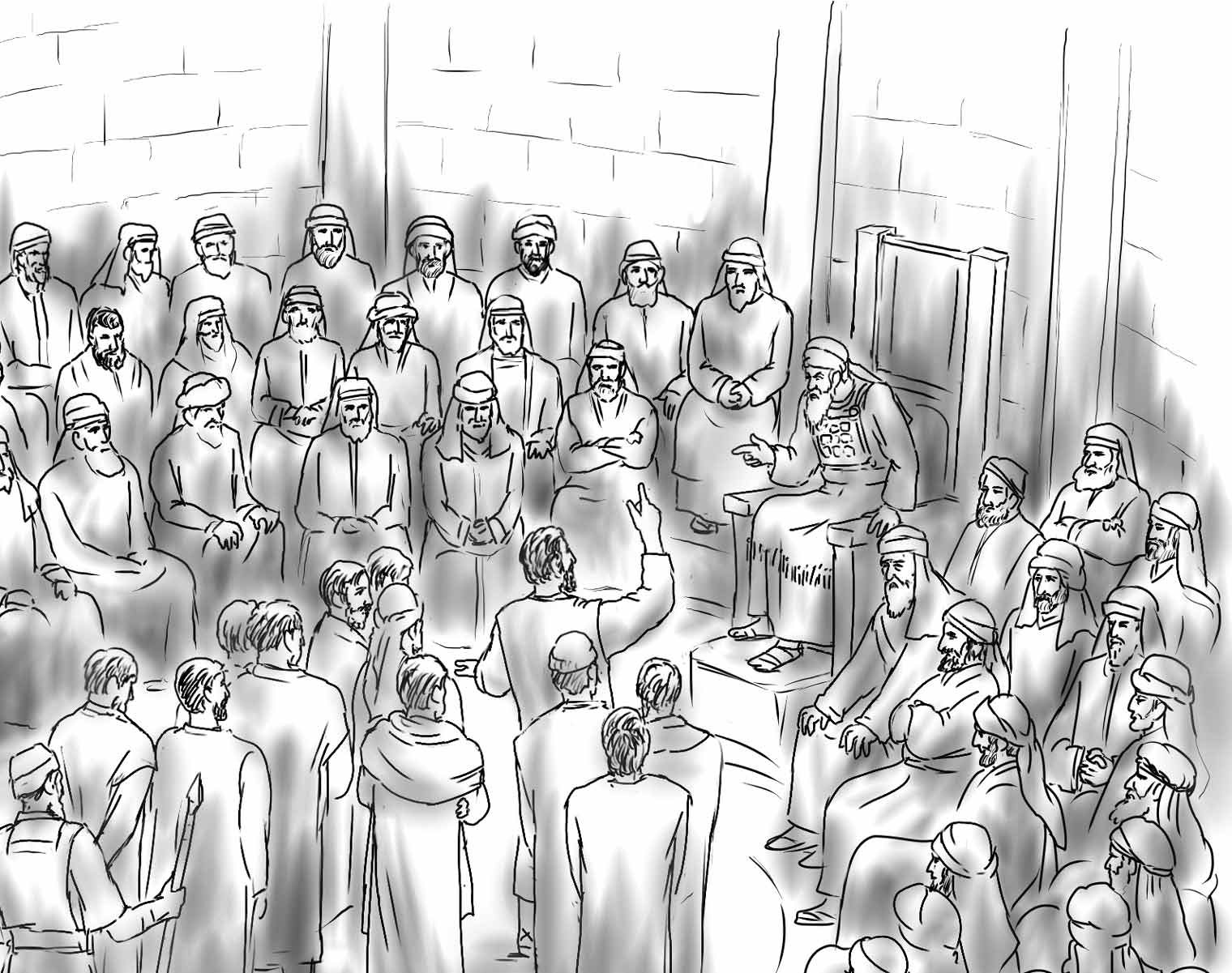
Question About the Medical System
Part One
Question:
Should we, as saints, acknowledge and value the work of doctors and medical nurses? Is it right to claim that God uses them and their medicines?
Reply: Part One
The short answer to this question is—
Be ye not unequally yoked together with unbelievers: for what fellowship hath righteousness with unrighteousness? and what communion hath light with darkness? And what concord hath Christ with Belial? or what part hath he that believeth with an infidel? And what agreement hath the temple of God with idols? for ye are the temple of the living God; as God hath said, I will dwell in them, and walk in them; and I will be their God, and they shall be my people. Wherefore come out from among them, and be ye separate, saith the Lord, and touch not the unclean thing; and I will receive you, and will be a Father unto you, and ye shall be my sons and daughters, saith the Lord Almighty.
Having therefore these promises, dearly beloved, let us cleanse ourselves from all filthiness of the flesh and spirit, perfecting holiness in the fear of God.
Let me call your attention to the words that describe a certain lack of relationship, a certain lack of rapport (like-mindedness, fellowship, comradeship, camaraderie, sympathy), between the way of God and other ways. What fellowship? What communion? What concord? What part? What agreement? We see immediately that it is possible to so conduct ourselves toward the medical people in such a way that an affinity develops between us and them. Let us ask ourselves: Just what are these people, especially in spirit? (For we are to “know… no man after the flesh.” (2 Corinthians 5:16) Where do they get their inspiration to do as they do and say as they say? Where is their focus? Do they live by “faith which worketh by love,” (Galatians 5:6) as the holy do, or do they live by some philosophy or creed that is not of God? And when we ask ourselves these questions, we see immediately that the entire system was not inspired of God. “For they that are after the flesh do mind the things of the flesh; but they that are after the Spirit the things of the Spirit.” (Romans 8:5) This is enough to guide us, right here, but the inspired writer adds, “For to be carnally minded is death; but to be spiritually minded is life and peace.” Without hesitation, we brand the medical “spirit” as carnal. It is focused on preserving fleshly life, regardless of the will of God. Have you ever seen a doctor withhold treatment because he or she felt that it was time for the patient to put their house in order, for it was God’s time for them to die? Or to be focused on the affliction in such a way that a doctor would say, “You know, I believe that this affliction has been allowed to come upon you because God is dealing with you about (take your pick) how you treat your wife, your customers, your children.” The patients wouldn’t stand for it (what are they paying for?), and the general peer pressure of the medical community wouldn’t stand for it, either.
“For our rejoicing is this, the testimony of our conscience, that in simplicity and godly sincerity, not with fleshly wisdom, but by the grace of God, we have had our conversation in the world, and more abundantly to youward.” (2 Corinthians 1:12) What is this “fleshly wisdom”? How is it different from “the wisdom which cometh from above” (James 3:17)? What did Brother Paul mean when he told the Corinthian congregation, “And I, brethren, when I came to you, came not with excellency of… wisdom, declaring unto you the testimony of God…. That your faith should not stand in the wisdom of men, but in the power of God” (1 Corinthians 2:1,5)? (I am focusing on the right kind of wisdom of trusting God with our bodies in our afflictions, so I am not addressing the overall aspect of our faith not standing in the wisdom of men. I do want to say that intellectual conversion, instead of heart conversion, is just as emphatically taught against in these verses as is faith in God is taught for the needs of the body.) How indefensible is the doctor’s wisdom in the light of these scriptures! “That your faith should not stand in the wisdom of men, but in the power of God.” It goes both ways. Our faith in God for the salvation of our souls is the same faith as our faith in God for the needs of our bodies. Both must be inspired to be effectual and practical. “Now the body is not for fornication, but for the Lord; and the Lord for the body.” (1 Corinthians 6:13) Just as the body can be misused sexually, so also a reverence for fleshly existence misuses the body, too. If the knowledge had been allowed them, the medical profession would treat human beings so that they would never die, and are doing their best to make them live as long as possible. This disposition on their part ignores why we are down here, why the human creature is subject to the vanity of an earthly body. They are focused on fleshly life and on prolonging it to the maximum degree possible.
It means a great deal to consecrate not to live one moment longer than God wants me to live. There is great divine wisdom over this, and a great number of people have lived “beyond their time,” and God has suffered it to be so to illustrate the consequences to all who will look and ponder. We have a Bible example of this in Hezekiah, who was told, “Thus saith the LORD, Set thine house in order; for thou shalt die, and not live.” (2 Kings 20:1) Hezekiah asked for an extension, and God let him have it. But things did not go well for Hezekiah in those additional fifteen years. He got into a lot of trouble (v. 13-19; see also 2 Chronicles 32:25). We see the effect that having his own way had on his vision: “And he said, Is it not good, if peace and truth be in my days?” (2 Kings 20:19) There is more to this matter of living than just peace and truth in my days. We do not live to ourselves or die to ourselves (Romans 14:7).
A brother told me of the experience of a elderly sister in his congregation. She was a child of God and wished to trust God exclusively. When she was allowed a life-threatening affliction by divine providence, she was consecrated to go, but her unsaved children wanted to keep her. So they took her to the medical profession, and God permitted her to stay alive. She suffered terribly for years after. The children got to keep her for a while longer, all right, but it was not a cause for rejoicing. Said the brother, “It is better for God to have His way. He knows best.” I say amen. It is better for God to have His way, no matter how it looks to us. God help us to get deeper in Him.
The poet grasped the point of divine truth, and he wrote:
“God’s way is best; if human wisdom
A fairer way may seem to show,
’Tis only that our earth-dimmed vision
The truth can never clearly know.”*
Down here, where the veil of the flesh is thick, we see through a glass darkly. But we wish to add that inspired faith pierces that veil and soars in the sunlight of eternity. God help us to follow the rest of the poet’s counsel, inspired of divine wisdom and inspiration.
“Had I the choosing of my pathway,
In blindness I should go astray,
And wander far away in darkness,
Nor reach that land of endless day.
“He leadeth true; I will not question,
Though through the valley I shall go;
Though I should pass through clouds of trial,
And drink the cup of human woe.
“God’s way is best; heart, cease thy struggling
To see and know and understand;
Forsake thy fears and doubts, but trusting,
Submit thyself into His hand.
“Thy way is best, so lead me onward,
My all I give to Thy control;
Thy loving hand will truly guide me,
And safe to glory bring my soul.”*
As long as Israel trusted God whole-heartedly, He fought their battles and administered healing, admonishment, and guidance, as needed. He knew how to keep them from being puffed up by their victories (Judges 7:2,4,7); He knew how to keep them from discouragement, from annihilation. And, my brother, He knows how to deliver the godly out of temptations—including the temptations to trust Him less than completely. But when they were weakened and damaged by much disobedience and idolatry, they began to form alliances with other countries. They began to mix faith in God with faith in other things, and the result was the same as it is today. Faith in God waxes less, while faith in the other things increases. Jesus foresaw the decrease in faith that would accompany the increase of knowledge in the last days, and He said, “Nevertheless when the Son of man cometh, shall he find faith on the earth?” (Luke 18:8) And again, “For there shall arise false Christs, and false prophets, and shall show great signs and wonders; insomuch that, if it were possible, they shall deceive the very elect.” (Matthew 24:24) God has permitted man to learn much about the intricacies of fleshly life, but this knowledge puffs him up and hurts his faith. The flood of information we have about the physical body has the potential to even deceive the very elect. It can cause us to think that we have a grasp of the realities of physical existence, when we have actually only scratched the surface of our physical diversities, and it ignores the connection to our spiritual existence. We are as children who get exalted when we learn just a little. We began to think ourselves competent to manage things, while the truth is that we are poor, blind, and naked and know nothing such as we ought to know. How deceptive this exposure to a little knowledge in only a small portion of the overall picture that would deceive even the very elect, were it not for the guidance of the Holy Ghost, who leads us away from fleshly wisdom. The Holy Ghost helps us to perceive the end results of many things of our day which exhibit great signs and wonders. “Ye shall know them by their fruits.” (Mark 7:16) Note that “fruits” is plural, not singular—it is more than one fruit that exposes them.
“But as it is written, Eye hath not seen, nor ear heard, neither have entered into the heart of man, the things which God hath prepared for them that love him. But God hath revealed them unto us by his Spirit: for the Spirit searcheth all things, yea, the deep things of God.” (1 Corinthians 2:9-10) Many of the mysteries of physical life which God has prepared for them that love Him have not entered into the mind of man, either. “For I am fearfully and wonderfully made: marvellous are thy works; and that my soul knoweth right well.” (Psalm 139:14)
The presumption that supposes that we can take from the world (including the medical world) just enough to do us good without damaging our faith in God is an exceedingly dangerous presumption. If we could see Biblical examples of good fruit proceeding from such an approach, we would gain confidence that God meant and means to work that way, but behold! The opposite is true. As one brother said, “There is not one word in the Bible favorable to physicians.” This is not only true, but there is an either/or in trusting God versus trusting man. “Thus saith the LORD; Cursed be the man that trusteth in man, and maketh flesh his arm, and whose heart departeth from the LORD…. Blessed is the man that trusteth in the LORD, and whose hope the LORD is.” (Jeremiah 17:5,7) Notice the either/or of these verses. But the Word goes closer yet and immediately says, “The heart is deceitful above all things, and desperately wicked: who can know it?” (Jeremiah 17:9) And then the voice of inspiration puts before us this information: “I the LORD search the heart, I try the reins, even to give every man according to his ways, and according to the fruit of his doings.” (Jeremiah 17:10) Notice the trying aspect of this. “Thou shalt remember all the way which the LORD thy God led thee these forty years in the wilderness, to humble thee, and to prove thee, to know what was in thine heart, whether thou wouldest keep his commandments, or no.” (Deuteronomy 8:2)
It is the way of (carnal) man to contend that he has a right to do whatever seems good to him to preserve physical life, particularly his own. Many sinners really believe that they have a right to tell lies, kill in self-defense, and even to “do it to them before they do it to me.” A life of resignation to the will of God, a life of trust and confiding in their Creator, does not appeal to them at all; indeed, it is Anathema Maranatha to them, a matter of abhorrence and outrage. They do not like to read such things as, “And Asa in the thirty and ninth year of his reign was diseased in his feet, until his disease was exceeding great: yet in his disease he sought not to the LORD, but to the physicians.” (2 Chronicles 16:12) But there is more to the story of Asa than even the either/or of this text. When we read what is recorded in the chapter up until this verse, we find his pattern of trust in other things. This instructs us in the nature of Asa’s heart. Verses 1-6 tells us of his league with the king of Syria. Verses 7-9 inform us of Asa’s reproof from God by the hand of the prophet Hanani, who reminded the king of how God had helped him in the past when Asa relied on God. Hanani declares that Asa “relied on the king of Syria, and not relied on the LORD thy God.” Notice how the concept of trusting in both God and the king of Syria does not exist—it is either/or again. Consider the implications of the word rely. This is a powerful word of trust: “To place or have faith or confidence.” Asa put his faith/confidence in something other than God—that is how God saw it. (Need we add that how God saw it is the truth of the matter?) After Asa was given this rebuke, the condition of his heart was further revealed by his subsequent actions. “Then Asa was wroth with the seer, and put him in a prison house; for he was in a rage with him because of this thing. And Asa oppressed some of the people the same time.” (2 Chronicles 16:10)
The same oppressive power accompanies the medical spirit today. It reacts carnally to an examination of motives. On one hand, it would have us believe that it is altruistic and unselfish, doing good to mankind out of the goodness of the heart. This is false. It charges dearly for its services. Its rulers and great men, so to speak, are not poor, dedicated servants of mankind, at all. Most of them are in it for the money. Most of their “compassion” is professional—it is an exhibition of fleshly wisdom from beginning to end. Instead of humility, we see arrogance or blindness. Also, a real contempt for anything that ignores their system. And this work of men has assumed an authority and place in the world in which we live that is dangerous to those who trust God exclusively with their bodies and the bodies of their children. They will accuse you of neglect and abuse if you use not their services; they will take from you your life and liberty for trusting God. If God takes our children out of this world, they would convict us of manslaughter. If we wait on God without involving them, they will convict us of child abuse. And they will draw no distinction between those of us who trust God responsibly and sincerely and those who do indeed neglect and abuse their children. They bury their errors and expose them not to public scrutiny, if possible, but they extend little or no charity to those who deal with affliction by other means. This includes not only those with exclusive trust in God, but those who doctor themselves and rely on anything other than the “authorized” medical system.

There is a day coming when all of this is going to be brought to light. “Fear them not therefore: for there is nothing covered, that shall not be revealed; and hid, that shall not be known.” (Matthew 10:26) You and I will be astonished at the revelation of the commonality of experience of the woman who had spent all her living upon physicians, neither could be healed of any. “And a woman having an issue of blood twelve years, which had spent all her living upon physicians, neither could be healed of any, came behind him, and touched the border of his garment: and immediately her issue of blood stanched.” (Luke 8:43-44) I daresay that the revelation of the massive failures of the medical community will be shocking and overwhelming. I daresay that the successes of the medical community will be revealed as narrow in scope, greatly exaggerated, and rather pitiful, as all of us—doctors, patients, and everybody else—stand before the great Physician, the Creator of the human body and human soul. He made germs; He made disease; He made us subject to the vanity of temporal existence; He tries and tests; He meddles and interferes in the affairs of mankind as His perfect wisdom and knowledge dictate; He designed the body to be imperfect, to be infirm. He originated childbirth, old age, and death. He subjected us to miscarriages, deformities, Down’s Syndrome, the diverse cancers, and AIDS. “Beloved, think it not strange concerning the fiery trial which is to try you, as though some strange thing happened unto you: But rejoice, inasmuch as ye are partakers of Christ’s sufferings; that, when his glory shall be revealed, ye may be glad also with exceeding joy.” (1 Peter 4:12-13)
And how is it Christ’s suffering? “Forasmuch then as the children are partakers of flesh and blood, he also himself likewise took part of the same…. For verily he took not on him the nature of angels; but he took on him the seed of Abraham. Wherefore in all things it behoved him to be made like unto his brethren.” (Hebrews 2:14,16-17) “For we have not an high priest which cannot be touched with the feeling of our infirmities; but was in all points tempted like as we are, yet without sin. Let us therefore come boldly unto the throne of grace, that we may obtain mercy, and find grace to help in time of need.” (Hebrews 4:15-16) “[Jesus] made himself of no reputation, and took upon him the form of a servant, and was made in the likeness of men: And being found in fashion as a man, he humbled himself, and became obedient unto death, even the death of the cross.” (Philippians 2:7-8) “Surely he hath borne our griefs, and carried our sorrows: yet we did esteem him stricken, smitten of God, and afflicted. But he was wounded for our transgressions, he was bruised for our iniquities: the chastisement of our peace was upon him; and with his stripes we are healed.” (Isaiah 53:4-5) “When the even was come, they brought unto him many that were possessed with devils: and he cast out the spirits with his word, and healed all that were sick: That it might be fulfilled which was spoken by Esaias the prophet, saying, Himself took our infirmities, and bare our sicknesses.” (Matthew 8:16-17)
To this picture, we might add that there are plenty of humans in the medical system who are touched in the flesh and moved with fleshly sympathy for the afflictions of others. This is commendable to a certain extent, but it is far from the ways of faith and complete trust in God—indeed, it gets in the way of complete, trusting consecration and interjects fleshly wisdom into the thinking of the afflicted because it is neither being led nor instructed of the Lord. God does not look at pain and trouble as we do, and we need to learn the ways of the Lord to trust Him as we should.
In the face of all the distrust of God in the world, in the face of their reliance on other things than their Creator, we rejoice in His trying of us. “That the trial of your faith, being much more precious than of gold that perisheth, though it be tried with fire, might be found unto praise and honour and glory at the appearing of Jesus Christ.” (1 Peter 1:7) We love Him. We trust Him. “Hold your peace, let me alone, that I may speak, and let come on me what will. Wherefore do I take my flesh in my teeth, and put my life in mine hand? Though he slay me, yet will I trust in him.” (Job 13:13-15) Our trials are not accidental; they are appointed. “That no man should be moved by these afflictions: for yourselves know that we are appointed thereunto.” (1 Thessalonians 3:3)
“In God have I put my trust: I will not be afraid what man can do unto me.” (Psalm 56:11) “But let him ask in faith, nothing wavering. For he that wavereth is like a wave of the sea driven with the wind and tossed. For let not that man think that he shall receive any thing of the Lord. A double minded man is unstable in all his ways.” (James 1:6-8)
“But the wisdom that is from above is first pure.” (James 3:17) This purity of trust, of motive; this wonderful purity from above; this perfect love of God and the pure faith that enables to see Him and trust Him perfectly—if we are lacking in this wonderful pure wisdom from above, “let him ask of God, that giveth to all men liberally, and upbraideth not; and it shall be given him.” Oh, what a wonderful promise! If you are mixing your trust in God with a reliance on other things, including the wisdom of the medical world, God has something infinitely better for you. Praise His name! If you will unwaveringly look to God, the pure wisdom shall be given you. Yea, you can trust the Lord exclusively and not be ashamed. The double-mindedness can be removed from you, with its accompanying instability. “Behold, God is my salvation; I will trust, and not be afraid: for the LORD JEHOVAH is my strength and my song; he also is become my salvation. Therefore with joy shall ye draw water out of the wells of salvation…. Cry out and shout, thou inhabitant of Zion: for great is the Holy One of Israel in the midst of thee.” (Isaiah 12:2-3,6)
I was sitting in a sectarian church on a weekday, for I had an appointment to read to the children in a church school there. I was waiting to be introduced to one of the teachers, and she was teaching a Bible story to the children. She was telling the story of the dealing of Jesus with an afflicted man (I do not remember just which story), and as she came to the part where Jesus healed the man, she hesitated. One could almost see the thoughts going through her mind. She knew what the Bible taught; she knew that Jesus had healed the man. She also knew that neither she or anyone else there (presumably) trusted God as the Bible taught, so she lied. I heard this with my own ears: she said, after the hesitation, “So Jesus said, ‘Take him to the doctor.’ ” I bowed my head in grief. I said in my heart, “O Lord! This lie has been told in Your name. This adult has deceived these little trusting hearts. You have been falsely represented. I am so sorry, Lord. I am sorry that I had to witness it.” I prayed that God would override the lie, that He would deal with the little hearts that heard the false doctrine that day. And now, as I write these words and relive what I heard that day, I marvel at the audacity of the thing. In the Bible record, there stood the Creator of mankind in fashion as a man—the Healer in Zion—yet this wicked woman would portray Him as needing the services of earthly physicians, as giving homage to the assumed place and position of arrogant, presumptuous fleshly wisdom. Oh, what a wicked thing! How evil! How disrespectful of God! “As though he needed any thing, seeing he giveth to all life, and breath, and all things.” (Acts 17:25) And she knew better! Surely the wisdom from above is without hypocrisy, whereas the wisdom from below is earthly, sensual, devilish!

Whence cometh this idea that we should rely upon the fleshly wisdom of the medical profession? “This persuasion cometh not of him that calleth you.” (Galatians 5:8) Paul spoke these words of the persuasive pull of the old Jewish religion to those who had trusted in Christ for their souls, but the thought is just as consistent with trusting God exclusively for our bodies. God is in the business of calling us to perfect trust, perfect reliance, on Him. Anything less that this is a denial of Him. There are those who pick at the normal human thinking of taking care of ourselves in diet, exercise, sanitation, etc. They would have us think that these considerations are less than perfect trust in God, and so they contend that to rely on formally educated fleshly wisdom (the medical profession) is consistent and but a step further. So when Paul advised Timothy to use grape juice (mildly fermented) instead of water for his often infirmities, these less-than-exclusive advocates would have us believe that normal maintenance (nursing) care is curative. They would blur the lines between normal care of the body and attempts to cure the afflictions that come on the body. So they would contend that Paul was attempting to cure Timothy of his infirmities by advising a change in diet.
There is a place for sound thinking, and there is a place for abandonment of all natural wisdom, so we read: “Trust in the LORD with all thine heart; and lean not unto thine own understanding.” (Proverbs 3:5) How will we know the difference? Where are the lines drawn? Answer: “And thine ears shall hear a word behind thee, saying, This is the way, walk ye in it, when ye turn to the right hand, and when ye turn to the left.” (Isaiah 30:21) If you read the verse before this, you will see that this applies to “the bread of adversity, and the water of affliction.” If you cannot hear the word, then you cannot trust as you should; you will turn to the wrong way. If you apply a fanatical philosophy, you will think of God as austere and less-compassionate and empathic than He actually is. If you apply a liberal philosophy, you will think of God as less strict and careful than He actually is. We need help from God to trust Him as we should. Again, we come to the promise: “Let him ask in faith, nothing wavering, and it shall be given him.”
Have you, dear brother, been given wisdom from above to trust Him? Then stay in the boundaries of that wisdom. If you have not been given it, it is there for you to get. God is on the giving hand. “It shall be given him.” He is a God at hand, not a God afar off. Humble your heart before God. Repent of any shortcomings in yourself that you are able to see. Tell the Lord that you love Him, want to love Him more, want to walk before Him unto all pleasing, want to glorify Him in your soul and in your body. “Ask, and it shall be given you… knock, and it shall be opened unto you.” (Matthew 7:7)
Welcome to the ranks of those who by the grace of God, not with fleshly wisdom, have their conversation in this world.
“ ’Tis so sweet to trust in Jesus,
Just to take Him at His Word;
Just to rest upon His promise,
And to know, ‘Thus saith the Lord!’ ”*
See also: Part 2